The Pride Festivities waylayed me from poetry momentarily.
In Lisa's class, we've been looking at Tom Raworth's website website and old copies of InFolio magazine. Infolio, if I'm not mistaken, Infolio was supposed to be a daily and included everyone. The mention of Raworth led me, as many things do, back to my father's seminal book "Talking Poetry." It wan't until I was in graduate school that I really delved into "Talking Poetry." I did my master's lecture on So-Called Language Poetry. This was sort of a rebellious act, as I went to a narrative school, Vermont College (after being rejected from Bard & Brown). Vermont College struck me as a school in which I strongly did and did not fit in....but that's another story.
"Talking Poetry" carried me though my work. Published in the 1980's it includes essays by Clark Coolridge, Theodore Enslin, Clayton Eshleman, William Everson, Thom Gunn, Kenneth Irby, Michael Palmer, Tom Raworth, Ishmael Reed, Stephen Rodefer, Nathaniel Tarn, Diane Wakoski, and Anne Waldman. Someone at Vermont stole my paperback copy, so I have my dad's hardback. Glued on the back page is a note from Diane Wakoski that says, "To Lee, who has helped contemporary poetry more than anyone I know." The book is out-of-print, but you can get it on Amazon.
The entire East Coast, West Coast Poetics have always been a disappointment to me. It bothers me that my father, Bill Everson, and even poets like Michael Palmer (who started in the East as George Michael Palmer) are laregly dismissed by Easterners.
Wednesday, July 25, 2007

Recent books & News From the Factory
We are slowly inching toward vacation. The new issue of Saint Elizabeth Street should be launched tommorrow morning. I will keep you posted.
I recently dipped into a number of books. I love CD Wright's Tremble. I think Wright has enormous talent. Although not all the poems caught my interest, the lion's share of the book is good in some way. I was also proud of myself for reconizing a reference to Michael Palmer in a poem called Lake Echo (See Notes for Echo Lake). I also have an homage to the Palmer piece in a long unfinished poem called Notes for Los Alamos. I also peeked into Rachel Zucker's two books. I think Rachel's poem of childbirth should be required reading for pregnant families. I think they should give it out in Lamaze class! It provides such a lyrical, real portrait of what it means to give birth. Strangely, I liked Rachel's first book better than the second, although I still enjoyed Eating the Underworld. For me, books based on myth are difficult because I feel like you have to bring so much knowledge to the plate, and I am so lacking in mythical history. I also, credit to Lisa Jarnot, discovered George Oppen. Oppen is probably one of the best poets that ever lived. If you haven't read him, you're missing out. I didn't like Simic's Hotel Insomnia. It left me feeling empty handed. The same for the few James Wright poems that I read. Wright, who I discovered via Anne Sexton's biography, strikes me as a lesser Pinsky or Kunitz.
We are nearing the end of The L Word. Other than good outfits and girls cute enough to make a straight girl gay, this show doesn't have much substance. But there was this one scene....Tina and Bett have a baby. Since Tina is the birth mother, Bett has to apply to the state to legally adopt the child. This is intense enough. But then, the state worker who does a family visit with them uses a wheelchair AND she is a complete bitch. She is prejudice and harsh and ridiculous. Then, Alice comes crashing in and hits the woman's car. Alice says, "Why can't you have a 'normal' car." This is layers and layers of prejudice. It shows how people who are considered outsiders from the norm are still prejudice toward OTHER outsiders. Not to mention that people with disabilities are supposed to be cheery and nice.
I recently dipped into a number of books. I love CD Wright's Tremble. I think Wright has enormous talent. Although not all the poems caught my interest, the lion's share of the book is good in some way. I was also proud of myself for reconizing a reference to Michael Palmer in a poem called Lake Echo (See Notes for Echo Lake). I also have an homage to the Palmer piece in a long unfinished poem called Notes for Los Alamos. I also peeked into Rachel Zucker's two books. I think Rachel's poem of childbirth should be required reading for pregnant families. I think they should give it out in Lamaze class! It provides such a lyrical, real portrait of what it means to give birth. Strangely, I liked Rachel's first book better than the second, although I still enjoyed Eating the Underworld. For me, books based on myth are difficult because I feel like you have to bring so much knowledge to the plate, and I am so lacking in mythical history. I also, credit to Lisa Jarnot, discovered George Oppen. Oppen is probably one of the best poets that ever lived. If you haven't read him, you're missing out. I didn't like Simic's Hotel Insomnia. It left me feeling empty handed. The same for the few James Wright poems that I read. Wright, who I discovered via Anne Sexton's biography, strikes me as a lesser Pinsky or Kunitz.
We are nearing the end of The L Word. Other than good outfits and girls cute enough to make a straight girl gay, this show doesn't have much substance. But there was this one scene....Tina and Bett have a baby. Since Tina is the birth mother, Bett has to apply to the state to legally adopt the child. This is intense enough. But then, the state worker who does a family visit with them uses a wheelchair AND she is a complete bitch. She is prejudice and harsh and ridiculous. Then, Alice comes crashing in and hits the woman's car. Alice says, "Why can't you have a 'normal' car." This is layers and layers of prejudice. It shows how people who are considered outsiders from the norm are still prejudice toward OTHER outsiders. Not to mention that people with disabilities are supposed to be cheery and nice.
Tuesday, July 24, 2007
Review of case sensitive by Kate Greenstreet
A fine definition for Kate Greenstreets first collection, case sensitive, can be found within the text:
What is the appeal of a mystery? Someone is looking for something,/actively.
case sensitive uncovers the mystery of the ordinariness of life unfolding. In most parts of the book, Greenstreet shows a talent at balancing the best type of poetry just enough narrative to ground the reader, just enough strong, lyrical language to make the reader want to know this narrative.
Although I may be mistranslating, I feel as if I know exactly what Greenstreet means when she writes:
I believe we need light
inside the body:
And,
“Taking turns
as the groaning, screaming woman.
And as the nurse
who brought the doll. It gets more like this.
What child has not played at the adult world? Then, grows up to find that the
complexities of this world are, as my father likes to say, endless. While Greenstreet probably doesn't mean these lines to refer to childrearing, they certainly could. I have not read such an accurate description of motherhood since Woolf's frustrated mother in To the Lighthouse. Interestingly, neither women have children. How can they be so right on the money?
case sensitive's testament to the magic of ordinariness is carried further in the second section of the book [Salt]. Greenstreet writes around a most common, boring household item. And one we couldn't live without! Each opening quote is taken from Salt: A World History by Mark Kurlansky.
I love the odd vastness of Greenstreet's influences. In other parts, Greenstreet quotes or mentions my three favorite artists: Basquiat, Lorine Niedecker and Agnes Martin: the latter two of which were/are two grossly underrated geniuses. Be honest, how many people do you know who've read Corman and Niedecker's letters? On can see traces of these womenÂ’s work in Greenstreet's. Work that relies heavily, if not exclusively, on subtly.
I am largely disinterested in humor in poetry. Humor in poetry is largely displaced. As trite as it might sound, I want poetry to tell the human condition, and/or to stretch the language to its full potential. Ironically, that is why I think the moments of humor in GreenstreetÂ’s book works. Andrea Baker once said something to the effect that Frank O'Hara makes humor an element of his poetry, but it doesn'intregity the integity of the poem. I think this applies to Greenstreet who uses humor in spots, but never slips into the easiness of making the poem a joke.
From Book of Love:
“Then the aliens come
and take our planet
and eat our food
and talk the world time about the better food they had on other planets.”
Barely two pages later, she flows easily back:
what connects us
to the Saints;
Desire.
The only issue I have about case sensitive is that it could be edited down a bit, and/or perhaps transformed into two books. Greenstreet has said that the book is comprised of five chapbooks. At 117 pages, case sensitive is quite a bit longer than the average introductory poetry book. There also seems to be a dichotomy in the book. Most of the poems rely on the strength of Greenstreet's talent for mixing lyricism and narrative. However, some poems, particularly those in Book of Love and Diplomacy slip into a modern obliqueness than I can not connect with. The poem "informant" begins:
"If x = x,
y =x,
abc = x, etc."
I confess to being alone in this opinion, however. Currently, it seems, many small journals are having a backlash against lyricism and obliqueness in perferred. I do think that, in poetry, beauty has to be number one. And, for the most part, Greenstreet gives it.
In Great Women of Science and Salt the reader meets interesting characters.
I want to know more about the lover who sits around wondering
"when the Bronze Age was."
The person who drives away from their lover to stay under
"half a neon cowboy"
and
"ripped out everything: shelves, cabinets, wallboard."
Most of all, I'm smitten with the strange mother who, at turns, cries, sleeps, and
needs constant attention from her daughter - who gives it to her.
"I was icing this cake for her,
but it was crumbling
underneath.
(It wasn't a very good-looking cake.)"
While the last two "chapters" are not as interesting as the first two, Greenstreet does return to the characters a bit. She also ends with some moments of (as Nan Goldin mind say) "High Art." The one political poem in the book "If water covers the road" is sensitive and poinent. The final prose poems are lovely and engaging. Best of all are philosophical thoughts about memory on the last page (which you will have to buy the book to read).
Finally, if you have never heard Greenstreet read, I highly recommend it. Matthew Hendrickson wrote (on his blog) of her reading,
"Kate is about the best damn reader of poems I've heard......Greenstreets voice, like this poetry is steadfast and dead pane. It is, at turns, like case sensitive, lyrical, narrative, mysterious, and full of wit."
That about says it.
What is the appeal of a mystery? Someone is looking for something,/actively.
case sensitive uncovers the mystery of the ordinariness of life unfolding. In most parts of the book, Greenstreet shows a talent at balancing the best type of poetry just enough narrative to ground the reader, just enough strong, lyrical language to make the reader want to know this narrative.
Although I may be mistranslating, I feel as if I know exactly what Greenstreet means when she writes:
I believe we need light
inside the body:
And,
“Taking turns
as the groaning, screaming woman.
And as the nurse
who brought the doll. It gets more like this.
What child has not played at the adult world? Then, grows up to find that the
complexities of this world are, as my father likes to say, endless. While Greenstreet probably doesn't mean these lines to refer to childrearing, they certainly could. I have not read such an accurate description of motherhood since Woolf's frustrated mother in To the Lighthouse. Interestingly, neither women have children. How can they be so right on the money?
case sensitive's testament to the magic of ordinariness is carried further in the second section of the book [Salt]. Greenstreet writes around a most common, boring household item. And one we couldn't live without! Each opening quote is taken from Salt: A World History by Mark Kurlansky.
I love the odd vastness of Greenstreet's influences. In other parts, Greenstreet quotes or mentions my three favorite artists: Basquiat, Lorine Niedecker and Agnes Martin: the latter two of which were/are two grossly underrated geniuses. Be honest, how many people do you know who've read Corman and Niedecker's letters? On can see traces of these womenÂ’s work in Greenstreet's. Work that relies heavily, if not exclusively, on subtly.
I am largely disinterested in humor in poetry. Humor in poetry is largely displaced. As trite as it might sound, I want poetry to tell the human condition, and/or to stretch the language to its full potential. Ironically, that is why I think the moments of humor in GreenstreetÂ’s book works. Andrea Baker once said something to the effect that Frank O'Hara makes humor an element of his poetry, but it doesn'intregity the integity of the poem. I think this applies to Greenstreet who uses humor in spots, but never slips into the easiness of making the poem a joke.
From Book of Love:
“Then the aliens come
and take our planet
and eat our food
and talk the world time about the better food they had on other planets.”
Barely two pages later, she flows easily back:
what connects us
to the Saints;
Desire.
The only issue I have about case sensitive is that it could be edited down a bit, and/or perhaps transformed into two books. Greenstreet has said that the book is comprised of five chapbooks. At 117 pages, case sensitive is quite a bit longer than the average introductory poetry book. There also seems to be a dichotomy in the book. Most of the poems rely on the strength of Greenstreet's talent for mixing lyricism and narrative. However, some poems, particularly those in Book of Love and Diplomacy slip into a modern obliqueness than I can not connect with. The poem "informant" begins:
"If x = x,
y =x,
abc = x, etc."
I confess to being alone in this opinion, however. Currently, it seems, many small journals are having a backlash against lyricism and obliqueness in perferred. I do think that, in poetry, beauty has to be number one. And, for the most part, Greenstreet gives it.
In Great Women of Science and Salt the reader meets interesting characters.
I want to know more about the lover who sits around wondering
"when the Bronze Age was."
The person who drives away from their lover to stay under
"half a neon cowboy"
and
"ripped out everything: shelves, cabinets, wallboard."
Most of all, I'm smitten with the strange mother who, at turns, cries, sleeps, and
needs constant attention from her daughter - who gives it to her.
"I was icing this cake for her,
but it was crumbling
underneath.
(It wasn't a very good-looking cake.)"
While the last two "chapters" are not as interesting as the first two, Greenstreet does return to the characters a bit. She also ends with some moments of (as Nan Goldin mind say) "High Art." The one political poem in the book "If water covers the road" is sensitive and poinent. The final prose poems are lovely and engaging. Best of all are philosophical thoughts about memory on the last page (which you will have to buy the book to read).
Finally, if you have never heard Greenstreet read, I highly recommend it. Matthew Hendrickson wrote (on his blog) of her reading,
"Kate is about the best damn reader of poems I've heard......Greenstreets voice, like this poetry is steadfast and dead pane. It is, at turns, like case sensitive, lyrical, narrative, mysterious, and full of wit."
That about says it.
Sunday, July 22, 2007
The Poetics of Smallmindness
I am finding that poetry is more and more the opposite of what I think it should be. One of my definitions of poetry would be that it is a place to expand our minds.
Instead, so many poets work so hard to make "poetry" an exclusive place that is so hard to get into. The Language Poets hate the St. Marks Poets. The Iowa Poets hate everyone. So many people want to lay claim to the word experiemental, but that word really has no meaning anymore. What is "experimental?" Is it Stein, Fanny Howe, Clark Coolridge, Jorie Graham, Norma Cole? One could give a concrete argument for why each of these poets would or wouldn't be called experimental. In his time. Eliot was certainly experimental....and what's so great about that tiny word anyway? Robert Hass, Stanley Kunitz, Anna Ahkmatova, and Denise Levertov are/were all great poets too, and they're not the "e" word.
There was a uncomfortable moment in my workshop last week when a guy I really like suggested that I read Simic. He looked at another guy waiting for the critical ax to fall. Then, he second guessed himself saying that he knows it's not cool to like Simic. That is the rub. Many people have divided poetry into what's cool and what's not. There's an agreed upon system that everyone must adhere. But this is so sophmoric. The great poets (like Ginsberg) read everything. Some poets (like Everson) never read poetry at all. His library was full of non-fiction. Also, I was saddened because a poetry blog I like to read was made private. What is that all about? I thought people wanted readers. Or perhaps the reasoning is like the "I'm not a plastic bag" bag. If you make yourself into a hot item, people will wait in line for you.
I wish, for one week, everyone would go read the opposite poet of whom they normally read. I think the world would be a better place.
Instead, so many poets work so hard to make "poetry" an exclusive place that is so hard to get into. The Language Poets hate the St. Marks Poets. The Iowa Poets hate everyone. So many people want to lay claim to the word experiemental, but that word really has no meaning anymore. What is "experimental?" Is it Stein, Fanny Howe, Clark Coolridge, Jorie Graham, Norma Cole? One could give a concrete argument for why each of these poets would or wouldn't be called experimental. In his time. Eliot was certainly experimental....and what's so great about that tiny word anyway? Robert Hass, Stanley Kunitz, Anna Ahkmatova, and Denise Levertov are/were all great poets too, and they're not the "e" word.
There was a uncomfortable moment in my workshop last week when a guy I really like suggested that I read Simic. He looked at another guy waiting for the critical ax to fall. Then, he second guessed himself saying that he knows it's not cool to like Simic. That is the rub. Many people have divided poetry into what's cool and what's not. There's an agreed upon system that everyone must adhere. But this is so sophmoric. The great poets (like Ginsberg) read everything. Some poets (like Everson) never read poetry at all. His library was full of non-fiction. Also, I was saddened because a poetry blog I like to read was made private. What is that all about? I thought people wanted readers. Or perhaps the reasoning is like the "I'm not a plastic bag" bag. If you make yourself into a hot item, people will wait in line for you.
I wish, for one week, everyone would go read the opposite poet of whom they normally read. I think the world would be a better place.
Saturday, July 21, 2007
Progress

In addition to reading, we have been making progress here at the factory. We are leaving on Thursday for Oregon. If you rob our house, please take our cats with you! Only one of them isn't toilet trained. I'm not telling which one.
The boys are hoping to ride bikes, hike, and swim. I'm looking forward to buying clogs, going to Powell's small press shelf, and seeing Rufus in concert in his favorite town.
We will have the long awaited new issue of SES up and running before we leave. Our [still nameless] reading series will start in Sept at WORD with a reading by Kristin Prevellet. In October, we're hoping to host Jennifee Knox and Shanna Compton, with my own book party soon to follow. We are hoping to have our tribute to Gene Frumkin compiled and up by September. The librarian interviews are still in the works. I, myself, will be attending Queens College MLS program in Fall unless the DOE offers me a sweet job. I'm not holding my breath! It's too bad I can't teach poetry. I'd be so good at it. It just doesn't seem in the cards.
Hal Sirowitz
Although I usually do not fall for straight narrative, I was completed charmed by Hal S's "Mother Said." Sirowitz has a very unique sense of humor that I think really steps out of the typical Poetry Slam genre, which is not my favorite work. His poems remind me of a strange Charles Bernstein quote from A Poetics in which he says something to the effect of poetry should be like television. We rarely find good poetry that is. Poetry does many things for us. It gives us beauty, it keeps us company, it holds up a mirror to our lives, it helps us know the pain of others, it expands the language. It is rare that good poetry is easy. It makes us work. Perhaps this is why people dread poetry so much. Hal doesn't make the reader work to hard, but the work is substantial in its own way. He is a true wit.
Today's Sunday Times presents yet another misguided response to poetry.
In his review of four new poetry books James Longenbach makes a point of noting " the field's [poetry] status lets poets pursue art for its own sake." True, poetry itself may be marginalized, but interestingly enough, two of these books were published by Houghton Mifflin and a third by Norton. If this is the height of the ignored, where do the rest of us lie?
In his review of four new poetry books James Longenbach makes a point of noting " the field's [poetry] status lets poets pursue art for its own sake." True, poetry itself may be marginalized, but interestingly enough, two of these books were published by Houghton Mifflin and a third by Norton. If this is the height of the ignored, where do the rest of us lie?
Thursday, July 19, 2007
A Library Visit
I check out a number of books from the library in order to catch up on things.
I got:
Hal Sirowitz, Mother Said
Rachel Zucker's first two books
Jack Spicer's Collected Poems
George Oppen's Collected Poems
Michael Palmer's Without Music
Marie Howe's What the Living Do
A Selected Zukofsky
I've started to shift through them.
Jim & I have also been watching "The L Word."
I got:
Hal Sirowitz, Mother Said
Rachel Zucker's first two books
Jack Spicer's Collected Poems
George Oppen's Collected Poems
Michael Palmer's Without Music
Marie Howe's What the Living Do
A Selected Zukofsky
I've started to shift through them.
Jim & I have also been watching "The L Word."
Saturday, July 14, 2007
Word As Such is not a new idea, but derived from the Russian Futurists writing in the early nineteen hundreds. The poet Khelbikov and his contempories devised the theory of Word As Such or "laying bare the device." "In order to revitalize their obsolete language, the new poets scorned any idea of literary fame and thumbed their noses at public incomprehension and committed themselves to increasing the volumn of the poetic vocabulary with the aid of arbitrary, derived words." (Sound familiar, anyone!) This statement lay the basis of ZAUM, a transmental language made up of words that were either wholly invented or derived from existing roots. In addition, their manifestos claimed to "cease the view of structure and pronounciation in accordance with the rules of grammar." Zaum was an answer to the problem (as they perceieved it) that "speech and thought cannot keep up with the experience of inspiration" and the artist must be "free to express not only in ordinary language but personal language."
Meanwhile, in a different part of Europe, a young lady named Gertrude Stein was working hard to form her our version of "zaum" or way of making the language new. Stein, never one to be shy about tooting her own horn writes of "a rose is a rose" (which some might not realize is actually from her children's book "The World is Round) "Now listen! Can't you see when language was new - as it was with Chaucer and Homer - the poet could use the name of a thing and the thing was really there. He could say 'O moon, O sea' and the moon and sea and love were really there. And can't you see that after hundreds of years had gone by and thousands of poems had been written, he could call on those words and find they were just worn out literary words. Now listen, I'm not a fool! I know in daily life we don't go around saying is a...is a...is a... Yes, I'm no fool, but I think in that line the rose is red for the first time in English poetry in a hundred years." Here, she is setting the path for poets such as Palmer.
Meanwhile, in a different part of Europe, a young lady named Gertrude Stein was working hard to form her our version of "zaum" or way of making the language new. Stein, never one to be shy about tooting her own horn writes of "a rose is a rose" (which some might not realize is actually from her children's book "The World is Round) "Now listen! Can't you see when language was new - as it was with Chaucer and Homer - the poet could use the name of a thing and the thing was really there. He could say 'O moon, O sea' and the moon and sea and love were really there. And can't you see that after hundreds of years had gone by and thousands of poems had been written, he could call on those words and find they were just worn out literary words. Now listen, I'm not a fool! I know in daily life we don't go around saying is a...is a...is a... Yes, I'm no fool, but I think in that line the rose is red for the first time in English poetry in a hundred years." Here, she is setting the path for poets such as Palmer.
Probably the first use of the term Language Poets was applied to the group in Ron Silliman's anthology "In the American Tree" which included Andrews, Coolidge, Grenier, himself, and other. And those published in Language magazine - including Watten and Hejinian. The work was refered to as "language-centered, minimal, and non-referential formalism. Not a group, but a tendency of many." Silliman writes of "Rejecting a speech-based poetics and consciously raising the issue of reference (i.e. narrative) to look at what a poem is actually made of - not images, not voice, not character or plot - but the invocation of a specific medium - language. (And) if nothing in the poem could be taken for granted, then anything might be possible."
Perhaps "non-referiality" is the wrong term. The idea of non-referiality in the purest sense does not exist because the words (unless nonsense) will always point to something. JLM writes, " Then, perhaps the term "non-referential" implies that disjunct 'references' and intentions' do not add up; if you say 'dog, watermelon, racine, Wisconsin, Jupiter, to quarter above the...' each member of the string has meaning in itself, but the string as a whole does not." But, even LP are not this extreme. I am not sure that a poem CAN be written without intent. JML writes, "I doubt that any such works, whether aleatoric or conciously composed through calculation or intuition are truly ' empty' of all content, even when the authors have none in mind - when they do not intend to say or imitate anything. Thus, it may be correct to call such verbal ways 'perceiver centered' rather than 'language centered.' This is asking the reader to take an active part, to use her imagination, and move away from the accademic notion that there is a teacher who 'gets' the poem and will teach it's exact meaning.
This, by the way, is the reason that poetry is in a state of crisis in America. The general population is not taught that you can or should read poetry on a visceral or emotional level. School teaches - per-k through grad school - that there is meaning specific to the poem that the reader must get correct. This has led to the fact that even the most intellegent people in our country (and people who do read) do not read poetry. LP force the reader, in my opinion, to respond viscerally, because the story is so slight.
Perhaps "non-referiality" is the wrong term. The idea of non-referiality in the purest sense does not exist because the words (unless nonsense) will always point to something. JLM writes, " Then, perhaps the term "non-referential" implies that disjunct 'references' and intentions' do not add up; if you say 'dog, watermelon, racine, Wisconsin, Jupiter, to quarter above the...' each member of the string has meaning in itself, but the string as a whole does not." But, even LP are not this extreme. I am not sure that a poem CAN be written without intent. JML writes, "I doubt that any such works, whether aleatoric or conciously composed through calculation or intuition are truly ' empty' of all content, even when the authors have none in mind - when they do not intend to say or imitate anything. Thus, it may be correct to call such verbal ways 'perceiver centered' rather than 'language centered.' This is asking the reader to take an active part, to use her imagination, and move away from the accademic notion that there is a teacher who 'gets' the poem and will teach it's exact meaning.
This, by the way, is the reason that poetry is in a state of crisis in America. The general population is not taught that you can or should read poetry on a visceral or emotional level. School teaches - per-k through grad school - that there is meaning specific to the poem that the reader must get correct. This has led to the fact that even the most intellegent people in our country (and people who do read) do not read poetry. LP force the reader, in my opinion, to respond viscerally, because the story is so slight.
Gluck's poem (which I do like) tells a story through the persona of the grandmother. While this is obviously not a confessional poem (the character may or may not represent the poet's own grandmother - perhaps she made it up). Gluck uses particularly vivid images
"The drugged Long Island summer sun."
"My children have their husband's hands."
She is witty when she alludes to the grandson as a pig, "Squealing in his pen."
Gluck makes a staement with her poem - "I have survived my life." Gluck uses metaphor, simile, language, and son to get a point across. Therefore, the poem becomes a means to an ends. This has historically been one of the purposes of language and poetry. But, there is also a different type of poetry - where the means IS the end.
"Dearest Reader" serves a completely different purpose, if any at all. The title is a bit of a misnomer, Is Palmer "really" speaking to the reader and, if so, what does he mean to tell us? Thre poem is a painting - a scene where "there were trees formed of wire, broad entryways" and so on. Many questions arise that would come up in the typical workshop setting - what is exactly going on here? What is the narrative? Meaning? These questions become obsolete in the poem. The strength of the poem is in it's raw beauty.
_________________________
"The drugged Long Island summer sun."
"My children have their husband's hands."
She is witty when she alludes to the grandson as a pig, "Squealing in his pen."
Gluck makes a staement with her poem - "I have survived my life." Gluck uses metaphor, simile, language, and son to get a point across. Therefore, the poem becomes a means to an ends. This has historically been one of the purposes of language and poetry. But, there is also a different type of poetry - where the means IS the end.
"Dearest Reader" serves a completely different purpose, if any at all. The title is a bit of a misnomer, Is Palmer "really" speaking to the reader and, if so, what does he mean to tell us? Thre poem is a painting - a scene where "there were trees formed of wire, broad entryways" and so on. Many questions arise that would come up in the typical workshop setting - what is exactly going on here? What is the narrative? Meaning? These questions become obsolete in the poem. The strength of the poem is in it's raw beauty.
_________________________
Sunday, July 08, 2007
Recycling
I want to recycle some stuff I wrote at the start of the blog. I'm going to put up some parts of my essay on LP and my essay on Nathaniel Tarn. The Deborah Garrison review is a few notches down the blog.
In the meanwhile, books checked out of the library: Duncan's Selected, Carl Phillip's The Rest of Love, and K Hahn's The Artist's Daughter.
In the meanwhile, books checked out of the library: Duncan's Selected, Carl Phillip's The Rest of Love, and K Hahn's The Artist's Daughter.
Saturday, July 07, 2007
Marxists With Trust Funds (Finding Meaning and Beauty in So-Called Language Poetry)
“When I wrote it only God and I knew what it meant. Now only God knows.” Robert Browning on “Sordello.”
Michael Palmer is a West Coast poet originally from New York City. After taking degrees in comparative literature from Harvard, he moved to San Francisco where he has lived since 1969. Palmer, who began publishing in the early seventies, is often classified with the so-called Language Movement in poetry. Palmer was not necessarily a part of the LM, but rather a precursor and seemingly influential on poets such as Bernstein, Watten, Hejinian, and Harryman.
Of his ties to the LM Palmer said in an interview with Jubliat,
“It goes back to an organic period when I had a closer association with some of those writers than I do now, when we were a generation in San Francisco with lots of poetic and theoretical energy and desperately trying to escape from the assumptions of poetic production that were largely dominant in our culture. My own hesitancy comes when you try to create, let's say, a fixed theoretical matrix and begin to work from an ideology of prohibitions about expressivity and the self—there I depart quite dramatically from a few of the L=A=N=G=U=A=G=E poets."
What Palmer describes as having in common with the LP is an attempt “to bring into question surfaces of language, normative syntax, and so on.” Opening up the possibility of experimentation with what Palmer calls “a necessary naming (for everyday language) but is arbitrary in terms of the thing itself.” Palmer goes on to say, “ If I were to ask you if a particular chair where free and you started wondering about the meaning of the term free, we’d never get anywhere. But, in the poem, when one has the possibility of multiple layers of meaning, that is when you have something that will open up unique areas of function.” (To my knowledge, these ideas derive from Wittgenstein, a favorite of the LP.) Interestingly, similar ideas were developed by Yoko Ono through visual arts when she wrote the words “This wall is blue.” on a white wall.
Of personality in poetry, Palmer says, “I’m not interested in myself- that’s just some guy sitting here drinking coffee and making a fool of himself. A self that’s transformed through language interests me, though….It seems reductive to me exactly at that point where you focus on the self alone and thus end up with a poetry of personality, and that exhausts itself as soon as the personality exhausts itself.”
Michael Palmer is a West Coast poet originally from New York City. After taking degrees in comparative literature from Harvard, he moved to San Francisco where he has lived since 1969. Palmer, who began publishing in the early seventies, is often classified with the so-called Language Movement in poetry. Palmer was not necessarily a part of the LM, but rather a precursor and seemingly influential on poets such as Bernstein, Watten, Hejinian, and Harryman.
Of his ties to the LM Palmer said in an interview with Jubliat,
“It goes back to an organic period when I had a closer association with some of those writers than I do now, when we were a generation in San Francisco with lots of poetic and theoretical energy and desperately trying to escape from the assumptions of poetic production that were largely dominant in our culture. My own hesitancy comes when you try to create, let's say, a fixed theoretical matrix and begin to work from an ideology of prohibitions about expressivity and the self—there I depart quite dramatically from a few of the L=A=N=G=U=A=G=E poets."
What Palmer describes as having in common with the LP is an attempt “to bring into question surfaces of language, normative syntax, and so on.” Opening up the possibility of experimentation with what Palmer calls “a necessary naming (for everyday language) but is arbitrary in terms of the thing itself.” Palmer goes on to say, “ If I were to ask you if a particular chair where free and you started wondering about the meaning of the term free, we’d never get anywhere. But, in the poem, when one has the possibility of multiple layers of meaning, that is when you have something that will open up unique areas of function.” (To my knowledge, these ideas derive from Wittgenstein, a favorite of the LP.) Interestingly, similar ideas were developed by Yoko Ono through visual arts when she wrote the words “This wall is blue.” on a white wall.
Of personality in poetry, Palmer says, “I’m not interested in myself- that’s just some guy sitting here drinking coffee and making a fool of himself. A self that’s transformed through language interests me, though….It seems reductive to me exactly at that point where you focus on the self alone and thus end up with a poetry of personality, and that exhausts itself as soon as the personality exhausts itself.”
Thursday, July 05, 2007
Wednesday, July 04, 2007
I missed class Lisa's class yesterday. I was out with Jim involved in an anti-war subversive public art project. Sorry to be so vague. The people in charge of the project created a blog about the project. The NYPD found the blog and sent them a threatening message. Don't those guys have any criminals to catch?
Monday, July 02, 2007
Rukeyser, Wheelwright, and Olson

Today, I had my first experience in a library archive. At the nudging of Lisa Jarnot, I visited the Berg Collection at the New York Public Library. I was supposed to be researching magazines, but got distracted by the fact that the library contains a Muriel Rukeyser archive. I was limited on time so I chose to read the letters of two poets who had written to Rukeyser, Olson and Wheelwright. In a reprinted letter to Cid Corman Olson refers to a type of poetry that is "o not pretty yet but will be (Rukeyser or lazy leftists)." This quote made me wonder about Rukeyer's relationship to Olson. Was he being sarcastic? Or did he really dislike the communist movement? I later found out that Olson was heavily into Roosevelt and a worker for the Democratic party. I did find one letter from Olson to Rukeyser in the archive. Note: with one exception that is a secret between my father & I, this was the first orginal letter I have held in my hands. The letter was very warm. It was addressed to Muriel in Venice, Calfiornia and made note to something pertaining to a script. I was particularly touched because the letter was written right after Rukeyser gave birth to her son, and Olson send them his warm wishes. Peter Bear (who grew up in Gloucester) told me that when the Maximus poems where published they were sold at the local department store right between "The Sound of Music" and "Summers in Gloucester."
The second group of letters was from John Wheelwright to Rukeyer. I learned of their friendship while looking through the database before going to the library. Wheelwright is a poet with little or no attention. He struggled to make his poetry known during his life time and it has largely disappeared sense. (Ashberry, however, wrote a brilliant essay about Wheelwright -- I don't have the title of the book right here). Wheelwright is of special interest to me because he was related to the aforementioned Peter (great-uncle by marriage although not Wheelwright's own as he was homosexual). I didn't know that Wheelwright and Rukeyser were friends and collegues. Rukeyser also planned to publish a magazine (Housatonic) for which she had accepted Wheelwright's work. In the letters Wheelwright says the strangest thing: Nothing has happened to me except that I have not married. The tone in the letter is sad -- yet why would he marry? He also mentions a resistance to going to Yaddo -- a scene of which Muriel was part of at the time -- and seems insecure that he will be included should he want to attend. The letters are full of these kind of insecurities. The glue that most held these two poets together was their commitment to Communism.
While both poets had difficulty with noteriety in their lifetimes, Wheelwright, however, did not find the posthumous (sp?) success that Rukeyser did through the feminst moment and the great folks at Paris Press. Although her books were out of print throughout the 70's, 80's, and early 1990's, she had a comback with "Out of Silence" in 1992 -- twelve years after her death. During her lifetime, she was notably excluded from Donald Allen's anthology for reasons which are unclear to me.
Rukeyser
Today, I am misisng a cat. I can't find Muffin anywhere. I think she might be hiding from the noise. The city is tearing up my street and the noise is horrendous. It reminds me of the story William Rukeyser tells of his mother: "She believed in the nobility of labor, but she recognized the absurdity of a lot of it. I remember her closely observing, from her bedroom window, a Con Ed crew at the corner of York and 88th, That crew dug holes in the pavement, covered them with steel plates, and then paved them over." William, who Muriel referred to in her letters as Laurie, describes his mother as a strong poet full of contradictions unwilling to tow any party's line, except her own. She was a lesbian, but slept with men. She was a feminist, but focused more in her writing and activism on injustices against the poor and Blacks. She was a poet, but wrote prose, children's books, and biographies.
While some of her poems are intensely romantic/sexual, Rukeyser was intensely private in her life. In one of the folios at the Berg, there is a series of unaddressed love letters and notes. The letters are full of such passion, one wonders for whom they were meant. An even more curious letter is one that Rukeyser addressed to herself in Provincetown Aug. 23, 1935 (even then, a mecca for gays and poets!) Rukeyser tells herself (or the later reader),
"I have wanted so wildly all these years without satisfaction that I think I could spend my life in bed with the Holy Ghost, Father, and the Son and still never be filled except in self-filling torment."
This has so many connations some of which verge of the sacreligious. In church we refer to being filled with spirit of the Lord, although Rukeyser was Jewish. There is also the cruder reading of a description of sex. The "letter" could also refer to the lot of a poet -- always craving more of poetry and like. The ending of the letter gives a glimpse into the cause of Rukeyser's depression. "See how a day can change your life....a telegram arrives...I smile, I smile."
Another correspondence which caught my notice was that between Rukeyser and Albert Einstein. I am not sure if this has ever been published. Rukeyser wrote a biography of the scientist Willard Gibbs. She asked Einstein to write an introduction. Einstein's reply in extremely harsh. (I will just put a few lines because one in not actually allowed to quote unpublished work).
"This (writing such a text) can only by done by someone.....grasp the material....personal side must be taken account of but it should not be the chief thing.....result is banal hero-worship....I have learned how hateful it is when a serious man is lionized....I cannot give my public endorsement to such an undertaking."
While some of her poems are intensely romantic/sexual, Rukeyser was intensely private in her life. In one of the folios at the Berg, there is a series of unaddressed love letters and notes. The letters are full of such passion, one wonders for whom they were meant. An even more curious letter is one that Rukeyser addressed to herself in Provincetown Aug. 23, 1935 (even then, a mecca for gays and poets!) Rukeyser tells herself (or the later reader),
"I have wanted so wildly all these years without satisfaction that I think I could spend my life in bed with the Holy Ghost, Father, and the Son and still never be filled except in self-filling torment."
This has so many connations some of which verge of the sacreligious. In church we refer to being filled with spirit of the Lord, although Rukeyser was Jewish. There is also the cruder reading of a description of sex. The "letter" could also refer to the lot of a poet -- always craving more of poetry and like. The ending of the letter gives a glimpse into the cause of Rukeyser's depression. "See how a day can change your life....a telegram arrives...I smile, I smile."
Another correspondence which caught my notice was that between Rukeyser and Albert Einstein. I am not sure if this has ever been published. Rukeyser wrote a biography of the scientist Willard Gibbs. She asked Einstein to write an introduction. Einstein's reply in extremely harsh. (I will just put a few lines because one in not actually allowed to quote unpublished work).
"This (writing such a text) can only by done by someone.....grasp the material....personal side must be taken account of but it should not be the chief thing.....result is banal hero-worship....I have learned how hateful it is when a serious man is lionized....I cannot give my public endorsement to such an undertaking."
Sunday, July 01, 2007
Larry Eigner


Less marginalized than Rukeyser and Wheelwright, but still not as popular as Duncan, Olson, & co. was the great poet Larry Eigner. Eigner was born in early August 1927 in Massachusetts Bay near Salem and Gloucester. He "got" cerebral palsy during a birth accident. He had a amazing number of books supported and helped by the most know poets: Levertov, Grenier, Watten, Creeley, and Silliman's "In the American Tree was dedicated to him." Eigner has an extensive archive Buffalo's EPC, including audio of interviews and readings. Levertov refers to Eigner's work as a "Wide open field of vision in which objects disparate themselves." Or what Bernstein means when he says "it meant a luminosity of every detail." (Bernsteins' obit to Eigner on the EPC)
While I am stiil uncovering the details, Lisa Jarnot said that Eigner got cerebral palsy during his birth due to the fact that forceps were used in his delivery. This is one, among many, ways that CP can occur. CP isn't a disease. It's merely a catch-all phrase to descibe any number of motor problems that can derive from brain trama during or shortly after birth. Eigner's CP was severe. Cared for by his mother, Eigner spent the first fifty years of his life basically sitting on his parents porch. Jarnot notes this and urges her students to look at Eigner's particular way of looking. In a post on the EPC, Silliman writes that Eigner actually began to write (as a teenager) before he learned to speak & wrote on a typewriter. (He did do minimal handwriting -- I received a book signed by him last year for Christmas!) His limited physical ability and energy help account for his short lines and short poems. I hope Silliman won't mind me quoting him. Of Eigner's lines he writes, "the complex choreography of one whose total physical vocabulary is in use in the composition of the poem."
After his father's death, Eigner moved to Berkeley to live with his brother. He was 51 years old. My father, Lee Bartlett, who was an undergraduate at Berkeley remembers seeing Eigner "rolling down the street." Eigner says in the EPC interview that "physical excercise was the hardest part of his life, everything else was a vacation." I was surprised to find that the many of the people in my workshop were naive about Eigner's disability and still considered in a "disease."
I can imagine Eigner's life well, and where the poems come from. His body was completely non-functional. Yet, he was an absolute genius. One way to look at such a disability is that Eigner was not burdened by things like a job, family, or housekeeping. This is not to glamourize such a position, but to say that one wouild be able to devote one's entire time/life to poetry and thinking. I am sure he suffered great lonlinesses though. And while he was revered within the poetry community, he probably was rejected by mainstream society.
Saturday, June 30, 2007
Gone Cold on PS 1's Warm Up
I'm such an old lady. I went to the Warm Up party today at PS 1 in Queens. I used to love this thing a few years back. It used to be a neighborhood-type-party thing. But them Manhattan got ahold of it. Now it is a hipster meat market. & what's up with those 1980's outfits. I swear Sex in the City killed fashion. Sure, everything looks good on Carrie, but boys and girls the 80's were ugly in the 80's!
Friday, June 29, 2007
Wednesday, June 27, 2007
Editing
I am finally putting together the new issue of SES. Our last issue was in Fall 2006.
SES tends to receive less submissions than other magazines. This is both good and bad. Less work, but less selection. When I consider that "Poetry" probably getting 300 submissions a week, the idea is staggering. But, then again, the editing of SES is a one person operation. Ths is why sometimes things don't move as smoothly as they should. I sometimes take awhile to get back to poets.
Also, rejecting poets for me is always difficult. I worry that I am dredging up bad karma when it's time to put my own work in the mail. It is actually easier to reject poets who have been published in choice magazines. I figure that if a poet can get his/her work into Poetry, Paris Review, and so on, that a rejection from SES will hurt only a little bit. However, some might see it the other way, how can I get into PR and not this tiny journal. I think that editors reasons for rejection are vast. The magazine could be full. The editor could be tired. The editor could have a narrow asthetic. S/he might only want to publish people they have heard of before. The poet's work might just be bad. University journals are particularly problematic as the first eyes on the poems tend to be those of graduate students whose ideas can be still forming. There are also the good ole' political reasons. A poet is kidding themselves if they think they don't exist.
The entire system though remains somewhat of a mystery due to the fact that the rejected poet receives a tiny slip printed paper or a form email. (I hope to shed some light on this in one moment.) But, rejection is tedious and soul-crushing, no matter where it comes from. And it is just part of the game. In the past year or so, I've been rejected from Paris Review, 3rd Bed, Harvard Review, Cue, Sentence, Drunken Boat, APR, Poetry, MiPoesis, Denver Quarterly, and countless others. I've had poems accepted by plenty of folks too.
Now, about those reasons. SES is slightly flawed because it reflects the taste of one person. The perfect magazine might be run by a group of people from all different schools/asthetics who had to "fight it out" and make something comprehensive. This was the orginal idea behind SES. I was more influenced by Language Poets and lyricism -- sort of like the Mei Mei Berssenbrugge hybrid. While my husband was from the Slam tradition. With these two backgrounds we thought we could make something expansive. Alas, the editing fell to me, the web stuff to Jim.
I try to be a diplomatic regarding style as one person can be. One can only expand the mind so much because that thing -- taste -- always gets in the way. I tend to like poems that are somewhat lyrical. I like prose poems. I like poems that have startling images. I like poems that challenge form (such a Mary Higgins). I rarely connect with political poems. Poems that have lines that sound like prose don't usually work for me. I don't like poems about sex. There are a number of words in poems that drive me nuts. (Yes, I can reject a poem based on a word!) The major problem I have with poetry is that I don't like work that is oblique without reason. This seems to be the trend right now. We can thank the language poets for that one!
But, life is contradictory. And I might break all these rules, as quick as I set them.
It's so hard to pin down, that thing that is poetry.
PS: Send poems!
SES tends to receive less submissions than other magazines. This is both good and bad. Less work, but less selection. When I consider that "Poetry" probably getting 300 submissions a week, the idea is staggering. But, then again, the editing of SES is a one person operation. Ths is why sometimes things don't move as smoothly as they should. I sometimes take awhile to get back to poets.
Also, rejecting poets for me is always difficult. I worry that I am dredging up bad karma when it's time to put my own work in the mail. It is actually easier to reject poets who have been published in choice magazines. I figure that if a poet can get his/her work into Poetry, Paris Review, and so on, that a rejection from SES will hurt only a little bit. However, some might see it the other way, how can I get into PR and not this tiny journal. I think that editors reasons for rejection are vast. The magazine could be full. The editor could be tired. The editor could have a narrow asthetic. S/he might only want to publish people they have heard of before. The poet's work might just be bad. University journals are particularly problematic as the first eyes on the poems tend to be those of graduate students whose ideas can be still forming. There are also the good ole' political reasons. A poet is kidding themselves if they think they don't exist.
The entire system though remains somewhat of a mystery due to the fact that the rejected poet receives a tiny slip printed paper or a form email. (I hope to shed some light on this in one moment.) But, rejection is tedious and soul-crushing, no matter where it comes from. And it is just part of the game. In the past year or so, I've been rejected from Paris Review, 3rd Bed, Harvard Review, Cue, Sentence, Drunken Boat, APR, Poetry, MiPoesis, Denver Quarterly, and countless others. I've had poems accepted by plenty of folks too.
Now, about those reasons. SES is slightly flawed because it reflects the taste of one person. The perfect magazine might be run by a group of people from all different schools/asthetics who had to "fight it out" and make something comprehensive. This was the orginal idea behind SES. I was more influenced by Language Poets and lyricism -- sort of like the Mei Mei Berssenbrugge hybrid. While my husband was from the Slam tradition. With these two backgrounds we thought we could make something expansive. Alas, the editing fell to me, the web stuff to Jim.
I try to be a diplomatic regarding style as one person can be. One can only expand the mind so much because that thing -- taste -- always gets in the way. I tend to like poems that are somewhat lyrical. I like prose poems. I like poems that have startling images. I like poems that challenge form (such a Mary Higgins). I rarely connect with political poems. Poems that have lines that sound like prose don't usually work for me. I don't like poems about sex. There are a number of words in poems that drive me nuts. (Yes, I can reject a poem based on a word!) The major problem I have with poetry is that I don't like work that is oblique without reason. This seems to be the trend right now. We can thank the language poets for that one!
But, life is contradictory. And I might break all these rules, as quick as I set them.
It's so hard to pin down, that thing that is poetry.
PS: Send poems!
Sunday, June 24, 2007
Pride Parade
Mayor Bloomberg was in the gay pride parade! I wish he'd run for president! We viewed the parade in front of the library. I think Jeff was pretty bored. It was hard to see, and just looked like people marching by. He did enjoy his little rainbow flag though. Despite my explaination, I don't think Jeff could really attribute any real meaning to the parade. I think it is because we have taught him not to be prejudice, and he doesn't consider these distinctions at this point. Still, it was so cute to see him waving around his rainbow flag saying the pledge of alliance!
For the most part, the parade was fairly sedate. We primarily saw the church groups. I was wondering if the parade has calmed down in recent years. I think that as more and more people come out of the closet, there is more diversity, and slightly less wildness. This sort of sucks, but it's good too.
For the most part, the parade was fairly sedate. We primarily saw the church groups. I was wondering if the parade has calmed down in recent years. I think that as more and more people come out of the closet, there is more diversity, and slightly less wildness. This sort of sucks, but it's good too.
Coney
The Mermaid Parade was a little too hetro for me. Royal & Jim loved it! If I want to see boobs, I can take off my shirt and look in the mirror. Jeff & I are off to the P:ride Parade. I will report back shortly.
Friday, June 22, 2007

Monday, June 18, 2007
Projects in the works
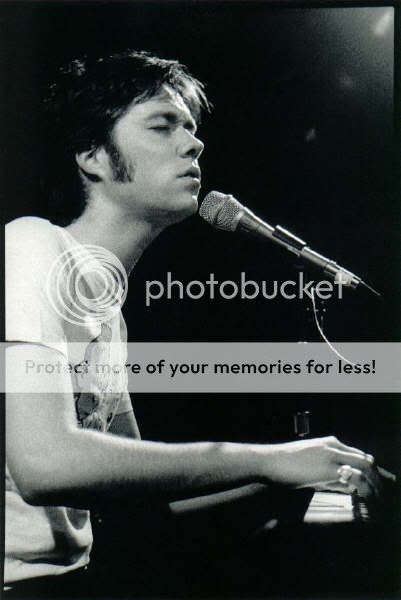
Rufus's projects in the works are an opera commissioned by the Met, a tour, and a Judy Garland show at the Hollywood Bowl. We will see him in Portland.
We beat Rufus out for the number of pending projects which include an interview with Charles Bernstein, Issues 6 & 7 of SES, interviews with librarians (that should be fun!), a fall reading series, and continued writings on Rukeyser, Olson, and Eigner. No wonder we are tired!
In the meanwhile read this stuff:
Didi Menedez's really mean reviews
Davidson's amazing review of Notley
Interview with the fabulous Eleni and her sidekick Eva Grace
No Berg
I was supposed to spend the day at the Berg, but alas, it's closed! In the meanwhile, I have located Eigner's archive. Luckily, it's close, Storrs CT, and I may be able to go later in the summer.
Eigner's work explifies the opposite of what I was critizing in the so-tendy poetics of identity. Eigner never, to my knowledge, wrote narrative poems about his disability. Writing such poems may have drawn a different group of readers in, and perhaps, had him published in the New Yorker. Eigner decided, rather, to stay true to his "voice." And yet, his disability is all over the poems, he doesn't need to tell it. Eigner's decision to take the path on an innovator, I am sure, endeared him to the aformentioned poets. One wonders, did he consider the fact that his immense talent could have been used as a method to pull him into the mainstream?
Reading Olson and Eigner has made me realize something; there was language poetry BEFORE language poetry. I know the "big" girls and guys attest to this; Silliman dedicated "In the America Tree" to Eigner. But, I think, as history gets further away from the post-war era, this recognition gets too watered down. Young poets are fixed on the concept of what they call "experimental." I have heard, from here and there, that the words lyrical and narrative are ugly dirty words. This is all and fine. But, I think "experimental poets" writing now have to realize that they are perhaps a fifth generation; after Stein/Pound, Olson/Eigner, The Language Poets, Claudia Rankine, Harriet Mullin and poets slightly younger than the LP, and finally poets currently in their twenties and thirties. I, myself, was always missing the Olson link.
Eigner's work explifies the opposite of what I was critizing in the so-tendy poetics of identity. Eigner never, to my knowledge, wrote narrative poems about his disability. Writing such poems may have drawn a different group of readers in, and perhaps, had him published in the New Yorker. Eigner decided, rather, to stay true to his "voice." And yet, his disability is all over the poems, he doesn't need to tell it. Eigner's decision to take the path on an innovator, I am sure, endeared him to the aformentioned poets. One wonders, did he consider the fact that his immense talent could have been used as a method to pull him into the mainstream?
Reading Olson and Eigner has made me realize something; there was language poetry BEFORE language poetry. I know the "big" girls and guys attest to this; Silliman dedicated "In the America Tree" to Eigner. But, I think, as history gets further away from the post-war era, this recognition gets too watered down. Young poets are fixed on the concept of what they call "experimental." I have heard, from here and there, that the words lyrical and narrative are ugly dirty words. This is all and fine. But, I think "experimental poets" writing now have to realize that they are perhaps a fifth generation; after Stein/Pound, Olson/Eigner, The Language Poets, Claudia Rankine, Harriet Mullin and poets slightly younger than the LP, and finally poets currently in their twenties and thirties. I, myself, was always missing the Olson link.
Sunday, June 17, 2007
Wednesday, June 13, 2007
bad press is better than no press
Saint Elizabeth Street was lucky enough to be reviewed by Didi Menendez in her project to review online journals. I can' t do links, but her URL is http://didimenendez.blogspot.com/ I have to warn you, it's a pretty negative review! This isn't a problem. Some of the stuff Didi points out is right. But, I'm disappointed because she didn't critique the content, which is my area. This brings up a question. With regard to online journals, what is more important -- content or form?
In Lisa's class, we are studing old magazines. Arc2, Moby 1 (did I write it correctly) was McClure's magazine with one issue. It is simply blue cardboard-ish stapled togther thingy. But, who is in it: Levertov, Olsen, Creeley, Ginsberg, Duncan. Need I go on?
In other news, Lisa Jarnot's class is the highlight of my week. It reminds me of how far we can delve into poetry. The minute you finish reading something, you realize that you haven't read something else. It is so magical how diverse poetry is, how we all come at it from different angles, and we all have knowledge to share. I don't want to embarrass her, but I think Lisa is the third most knowledgable person I know personally. Well, or would it be second? Nathaniel and Dad are tied for first place.
Finally, I have piss-in-my-pants exciting news regarding my book. I'm too nervous to tell it here, but if you email me, I'll tell you!
In Lisa's class, we are studing old magazines. Arc2, Moby 1 (did I write it correctly) was McClure's magazine with one issue. It is simply blue cardboard-ish stapled togther thingy. But, who is in it: Levertov, Olsen, Creeley, Ginsberg, Duncan. Need I go on?
In other news, Lisa Jarnot's class is the highlight of my week. It reminds me of how far we can delve into poetry. The minute you finish reading something, you realize that you haven't read something else. It is so magical how diverse poetry is, how we all come at it from different angles, and we all have knowledge to share. I don't want to embarrass her, but I think Lisa is the third most knowledgable person I know personally. Well, or would it be second? Nathaniel and Dad are tied for first place.
Finally, I have piss-in-my-pants exciting news regarding my book. I'm too nervous to tell it here, but if you email me, I'll tell you!
Tuesday, June 12, 2007
Last night I happened to run accross my copy of Tory Dent's What Silence Equals. I thought it was unfair for me to comment on her work without re-reading her, so I took a peek. I still had the same feeling that I had the first time I read the poems. My mentor at Vermont College, Bill Olsen, likes Dent's work, as do many others. I just can't get into it.
Dent's poems are too compact. There are few stanza breaks, there are no spaces between the lines, there is no room to breathe, there is no air. However, her lines and images are not cliche's. They struggle to be new. It is quite possible that Dent wants to do the very thing I wrote about previously: confront her topic (AIDS) and, simulatiously, transend it. I also noticed the date of the book, 1993. What Silence Equals was written relatively near the beginning of the AIDS crisis in the US. I think, although not sure, that it was one of the first poetry books on the subject. It is clearly a brave move.
But, the experiement doesn't quite work. I can't find the emotion in the poems. I can't feel what Dent is going through. She keeps the reader distanced. I was, in short, bored. I can't help comparing Dent's poems to What the Living Do by Marie Howe. Here is the poem:
WHAT THE LIVING DO
Johnny, the kitchen sink has been clogged for days, some utensil probably fell down there.
And the Drano won’t work but smells dangerous, and the crusty dishes have piled up
waiting for the plumber I still haven’t called. This is the everyday we spoke of.
It’s winter again: the sky’s a deep headstrong blue, and the sunlight pours through
the open living room windows because the heat;s on too high in here, and I can’t turn it off.
For weeks now, driving, or dropping the bag of groceries in the street, the bag breaking,
I’ve been thinking: This is what the living do. And yesterday, hurrying along those
wobbly bricks in the Cambridge sidewalk, spilling my coffee down my wrist and sleeve,
I thought it again, and again later, when buying a hairbrush: This is it.
Parking. Slamming the car door shut in the cold. What you called that yearning.
What you finally gave up. We want the spring to come and the winter to pass. We want
whoever to call or not call, a letter, a kiss -- we want more and more and then more of it.
But there are moments, walking, when I catch a glimpse of myself in the window glass,
say the window of the corner video store, and I’m gripped by a cherishing so deep
for my own blowing hair, chapped face, and unbuttoned coat that I’m speechless.
I am living. I remember you.
Of course, the poems derive out of two vastly different situations. It must be so much easier to write about someone else's mortality rather than your own. However, Howe's poem delves into a emotion that I find so lacking in Dent's work. Howe examines the world much in the wacky way I though David Chase of the Sopranos did. She makes us stop and look at the world. She makes the ordinary magical. She reminds us of the tiny details, how wonderful and aweful.
Dent's poems are too compact. There are few stanza breaks, there are no spaces between the lines, there is no room to breathe, there is no air. However, her lines and images are not cliche's. They struggle to be new. It is quite possible that Dent wants to do the very thing I wrote about previously: confront her topic (AIDS) and, simulatiously, transend it. I also noticed the date of the book, 1993. What Silence Equals was written relatively near the beginning of the AIDS crisis in the US. I think, although not sure, that it was one of the first poetry books on the subject. It is clearly a brave move.
But, the experiement doesn't quite work. I can't find the emotion in the poems. I can't feel what Dent is going through. She keeps the reader distanced. I was, in short, bored. I can't help comparing Dent's poems to What the Living Do by Marie Howe. Here is the poem:
WHAT THE LIVING DO
Johnny, the kitchen sink has been clogged for days, some utensil probably fell down there.
And the Drano won’t work but smells dangerous, and the crusty dishes have piled up
waiting for the plumber I still haven’t called. This is the everyday we spoke of.
It’s winter again: the sky’s a deep headstrong blue, and the sunlight pours through
the open living room windows because the heat;s on too high in here, and I can’t turn it off.
For weeks now, driving, or dropping the bag of groceries in the street, the bag breaking,
I’ve been thinking: This is what the living do. And yesterday, hurrying along those
wobbly bricks in the Cambridge sidewalk, spilling my coffee down my wrist and sleeve,
I thought it again, and again later, when buying a hairbrush: This is it.
Parking. Slamming the car door shut in the cold. What you called that yearning.
What you finally gave up. We want the spring to come and the winter to pass. We want
whoever to call or not call, a letter, a kiss -- we want more and more and then more of it.
But there are moments, walking, when I catch a glimpse of myself in the window glass,
say the window of the corner video store, and I’m gripped by a cherishing so deep
for my own blowing hair, chapped face, and unbuttoned coat that I’m speechless.
I am living. I remember you.
Of course, the poems derive out of two vastly different situations. It must be so much easier to write about someone else's mortality rather than your own. However, Howe's poem delves into a emotion that I find so lacking in Dent's work. Howe examines the world much in the wacky way I though David Chase of the Sopranos did. She makes us stop and look at the world. She makes the ordinary magical. She reminds us of the tiny details, how wonderful and aweful.
Monday, June 11, 2007
A poet's translation of the Soprano's
I will not follow the masses. I quite enjoyed the final moments of the Sopranos. I look at it from a poet's point of view. Jim tipped me off with some of these ideas. This may all be a long shot, but I think the final scenes reflected ordinary life. How detailed life is. How it is viewed from many different perspectives. How, like in the show, we never know what will happen. Is there a Godfather reference in there? The creepy guy goes to the bathroom -- oh! the gun is hidden over the window!
Meadow crosses the street. Is she going to get hit by a car? Is she going to annouce her decision to go to med school? Her mother tells her father that she has gone to the doctor. A look of panic crosses his face. It turns out that Meadow is just changing her birth control pills! The parents have made a job for their son. They have tricked him into believing it's glamorous. but he ends up fetching coffee all day! Tony puts a quarter in the jukebox and nothing happens, except a song comes on. Tony rakes the yard, he looks at the sky, the mom announces the dinner plans, how close to real life can you get? How much further from TV can one stray? And certainly far, far from any mobster drama?
This is really TV reflecting life. We rake the leaves, we look at the sky, we order cokes, we all have a favorite stupid song from the 70's, 80's, or 90's. If it's not Journey, it's Boston or Blondie, or my favorite Supertramp.
David Chase has tricked us. He has slowed things down, made us look. Anyone in the family could die at any moment. But, couldn't any of us?
Meadow crosses the street. Is she going to get hit by a car? Is she going to annouce her decision to go to med school? Her mother tells her father that she has gone to the doctor. A look of panic crosses his face. It turns out that Meadow is just changing her birth control pills! The parents have made a job for their son. They have tricked him into believing it's glamorous. but he ends up fetching coffee all day! Tony puts a quarter in the jukebox and nothing happens, except a song comes on. Tony rakes the yard, he looks at the sky, the mom announces the dinner plans, how close to real life can you get? How much further from TV can one stray? And certainly far, far from any mobster drama?
This is really TV reflecting life. We rake the leaves, we look at the sky, we order cokes, we all have a favorite stupid song from the 70's, 80's, or 90's. If it's not Journey, it's Boston or Blondie, or my favorite Supertramp.
David Chase has tricked us. He has slowed things down, made us look. Anyone in the family could die at any moment. But, couldn't any of us?
Saturday, June 09, 2007
Friday, June 08, 2007
The World According to Felix


Felix Gonzales-Torres headlines the Times art section today. He has a number of works in the Venice Biennale. As the world will have it, these things are never timely. The seminal Cuban-American artist has been dead for eleven years.
To my mind, GT is an artist who has been long underrated. He is a forethinker in so many aspects of 80's-90's atr, conceptually and politically. I first saw his work in about 1995 at the Chicago Art Institute. The piece I saw was strings of light bulbs hung in varying arrays from the ceiling. The guard told me that the bulbs were left on all the time, and burnt out at random. Once they burn out of course, they are never replaced. Ironically, at the time, this very, short visit to Chicago, I was meeting a friend who was beginning to die from HIV, and experiencing dementia. I lost touch with this person.
Because I was a generation younger than Felix, I have had the blessing of never having lost a friend to AIDS, although HIV has become part of my daily vocabulary. And death, in other forms, certainly is. Perhaps that is why Felix's work is so dear to me. It's all about the vanishing, and the audience taking part in the vanishing. The audience is invited to take the candy and eat it. To take a piece of paper and keep it. To make the art disintergrate, and yet live elsewhere. Even Yoko Ono has borrowed these ideas.
But, GT is smart too. He wrote," The most sucessful of all political moves are the ones that don't appear 'political.'
Thursday, June 07, 2007

I had the most hilarious interaction at the MOMA yesterday. I went to the information desk to try to get an "artist pass." I asked the attendant if the museum gave artist passes to writers. First, he said that I had to prove that I wrote a book. So, I showed him the UNM catalog. He looked at the book suspiciously, then he asked me for identification! Then, he made a phone call. He ended up telling me that the museum only gives cards to people they represent -- of course, many of which are DEAD! But, this isn't true anyway because I have friends with cards.
It is so funny to try to discuss the larger meaning of the word "art" with visual artists. They're just not having it!
Anyway, I shelled out the 75$ to see the Richard Serra show. I only saw the pieces in the garden. I didn't want to experience the sculptures in the sterile enviroment of the museum after seeing the perfection of them in nature. More on this later.
The child has been watching TV for 3 hours! I have to attend to him.
Tuesday, June 05, 2007

And of Lunchwithmom.blogspot.com
Jeff's damaged finger.
Segregation in NYC
and
The grumpy man of the LIRR
Segregation in NYC
and
The grumpy man of the LIRR
Interview

Things at Saint Elizabeth Street have been slow to say the least! I am preparing to interview Charles Bernstein. I have begun the long and windy road with "A Poetics." I have been thinking about this great quote -- something to the effect of, poetry should be like television.
Meanwhile, tonight I start Lisa Jarnot's workshop!
I'm also (somewhat) enjoying the new Rufus Wainwright CD. The first few songs are weak, but "Not Ready to Love" blows me away.
Thursday, May 31, 2007
Bhutan, Not Such A Happy Place After All
Bhutan is a country known for it's happiness, Buddhism, and beauty. But today I found out the king of Bhutan exiled 100,000 people from the country for not being Bhutanese (sp?) or Buddhist. What's next? Sweden?
Books and Culture
Yesterday, I snuck off to the 11AM movie to see Fay Grim. I REALLY have the hots for Parker Posey, but that's a whole other story.
In this film there is this great line: "Who cares if the writing is horrible -- if it sells, it's publishable." I can't believe that Hal Hartley was able to tap so famously into a compele metaphor for our society. I was reading an article (I think it was via Ron Silliman) about blogs being made into books. Of course, many of these are about sex. Can you say editor at Knofp + very bad poetry = enormous poetry success?
And yet, we are lucky to still have the small publishing world. I have been keeping tabs on Poetry Magazine's bestseller list. It's interesting, for weeks the two best sellers for "major" presses have been written by Mary Oliver and Billy Collins. This does not change. However, the "little" presses flow and change constantly, they include many poets, many forms. Perhaps there is hope.
In this film there is this great line: "Who cares if the writing is horrible -- if it sells, it's publishable." I can't believe that Hal Hartley was able to tap so famously into a compele metaphor for our society. I was reading an article (I think it was via Ron Silliman) about blogs being made into books. Of course, many of these are about sex. Can you say editor at Knofp + very bad poetry = enormous poetry success?
And yet, we are lucky to still have the small publishing world. I have been keeping tabs on Poetry Magazine's bestseller list. It's interesting, for weeks the two best sellers for "major" presses have been written by Mary Oliver and Billy Collins. This does not change. However, the "little" presses flow and change constantly, they include many poets, many forms. Perhaps there is hope.
Wednesday, May 30, 2007
2007
The official iist of 2007 NYFA Poets was released today. Two of my good friends and fine poets won the award: Anselm Berrigan and Kristin Prevallet. Yeah! Here is the complete list.
Betsy Andrews
Anselm Berrigan
Jen Bervin
DeWayne Dickerson
Brandon Downing
Sarah Gambito
Linda Jackson
Cate Marvin (Gregory Millard Fellow)
Ted Mathys
Rachel McKibbens
Sharon Mesmer
Kathleen Ossip
Julie Patton
Kristin Prevallet
Aaron Smith
Leah Souffrant
Karen Weyant
Betsy Andrews
Anselm Berrigan
Jen Bervin
DeWayne Dickerson
Brandon Downing
Sarah Gambito
Linda Jackson
Cate Marvin (Gregory Millard Fellow)
Ted Mathys
Rachel McKibbens
Sharon Mesmer
Kathleen Ossip
Julie Patton
Kristin Prevallet
Aaron Smith
Leah Souffrant
Karen Weyant
New Blog
I've decided to start a new blog. I am going to divide the two . From now on, poetry and political news will remain here. Parenting and disability news will be at http://lunchwithmom.blogspot.com. Meet me there! We're having grilled cheese for lunch.
Tuesday, May 29, 2007
Monday, May 28, 2007
Happy Memorial Day

This morning a neighbor called to me "Happy Memorial Day!" Ahhhh what a holiday, pools open, the beach crowd arrives, the barbeques get dusted off. I have always loved this weekend as it marks the beginning of my favorite season. But, two years ago, I really began to think about what Memorial Day is and it certainly is not happy.
My grandfather died on the Wed. before Memorial Day weekend 2005 (I think). My grandfather was one of my favorite people of all time. He had been a soldier during World War II in Guam. My grandpa's life was kind of a mystery to begin with. Supposedly he was an orphan. Supposedly he was part Indian. Supposedly, he lied about his age to join the army. Actually, no one really knew his age. As his Alzeimers increased, the picture got even murkier. Dad asked him if he'd killed anyone in the war and grandpa said, "yeah, probably." Anyway, losing my grandpa at this time made me think of the holiday in a deeper way.
In the last month about 100 American soldiers have died in Iraq. The war is NOT improving. Now about 3 people die a day, not to mention Iraqis. In his MD speech Bush said, "I don't know how to easy your pain." Well George, I can tell you what would ease MY pain -- stop letting men and women whose medium age is 20 get killed for nothing.
Sunday, May 27, 2007
THE NYC DOE -- and some good news
I'm making the leap. I am signing up for library school at Queens College this Fall. This is not a foolproof plan, but it's the best I can come up with at the moment. I found out that I can take 2 years off from the DOE for leave to study, which gives me the luxery of not having to resign. I am still hoping to get an adjunct job at the last moment...I haven't given up hope. But, I have to find a way to protect myself from the silliness of people who believe I can't do a good job. I have to say...I applied for a 8th grade ELA position last year at a certain school ....they hired someone else, I'm not sure why. I heard that the kids chased the teacher out. Now the school is hiring again this year for the same position. Am I egotistical to think -- why didn't they give me a chance! I have nothing if not persistance. As I said before, everyone wants the Bank Street 20 year teave cher/ S/he works for a year, leaves, and the game goes on....
But, I'm also pissy about the NY school system on a deeper level. Problems with my son's school and others in Williamsburg persist. Now, it turns out that as parents leave our school to go to the "better school" the parents at the "better school" are leaving their school to come to our school! Get it? Good because I don't. I would love to hear your ideas on this. Why are parents so damn fixated on their kids elementary education. Why isn't a school where the kids are safe and happy and learn something good enough? I judge people too much...but here's some gossip...a single mom who gets loans to send her kid to private school that is $20,000 a year! That's $200, 000 of debt BEFORE college!
A few months ago I read an article by Peter Singer in the Times. He pops up occasionally. I have REALLY mixed feelings about this philosopher due to his less than savory ideas about PWD. However, he put forth an interesting idea that sort of blew my head off. Why is one's own child more important than all the other children in the world? He posed the idea that if your child had to die in order to save 1,000 other children, would you be capable of doing it? Of course, I wouldn't. Very few people would. (And I know..I'm a judge!) But it would be interesting to apply this to children's education. What can be done with $200,000? Well, that could keep Anami House (the orphanage house in Tansania) in business for 15 years ...so it's an interesting question: one kid or many?
Second, in my stupid opinion, a child's MORALS are vastly more important than her education. I mean George Bush went to fucking YALE.
There is a school that all the parents in Williamsburger are twisting their panties to get into. It's called NEST. The think about NEST, which is a public school, is that it is educationally one of the best. However, a year or so ago, the parents and principal made a huge stink about sharing "their" buidling with a new school that I believed, if I'm right, included minority kids at a lower level. Can you say elitism? The pricipal was fired, the PTA quit. I know a mother who supposedly said she HOPES people are turned off by the scandel because her kid will get a spot!!!
If I sent my kid there, what message am I giving him? It's okay not to share? It's okay to be prejudice? His education comes before others? Hmmmm
But, I'm also pissy about the NY school system on a deeper level. Problems with my son's school and others in Williamsburg persist. Now, it turns out that as parents leave our school to go to the "better school" the parents at the "better school" are leaving their school to come to our school! Get it? Good because I don't. I would love to hear your ideas on this. Why are parents so damn fixated on their kids elementary education. Why isn't a school where the kids are safe and happy and learn something good enough? I judge people too much...but here's some gossip...a single mom who gets loans to send her kid to private school that is $20,000 a year! That's $200, 000 of debt BEFORE college!
A few months ago I read an article by Peter Singer in the Times. He pops up occasionally. I have REALLY mixed feelings about this philosopher due to his less than savory ideas about PWD. However, he put forth an interesting idea that sort of blew my head off. Why is one's own child more important than all the other children in the world? He posed the idea that if your child had to die in order to save 1,000 other children, would you be capable of doing it? Of course, I wouldn't. Very few people would. (And I know..I'm a judge!) But it would be interesting to apply this to children's education. What can be done with $200,000? Well, that could keep Anami House (the orphanage house in Tansania) in business for 15 years ...so it's an interesting question: one kid or many?
Second, in my stupid opinion, a child's MORALS are vastly more important than her education. I mean George Bush went to fucking YALE.
There is a school that all the parents in Williamsburger are twisting their panties to get into. It's called NEST. The think about NEST, which is a public school, is that it is educationally one of the best. However, a year or so ago, the parents and principal made a huge stink about sharing "their" buidling with a new school that I believed, if I'm right, included minority kids at a lower level. Can you say elitism? The pricipal was fired, the PTA quit. I know a mother who supposedly said she HOPES people are turned off by the scandel because her kid will get a spot!!!
If I sent my kid there, what message am I giving him? It's okay not to share? It's okay to be prejudice? His education comes before others? Hmmmm
On Fire

What is it about Fire Island that makes me such a lunatic? Yesterday, I took the boys on the 2 hour each way trip to get to the Sunken Forest. We had to take the ferry to Cherry Grove and walk to the Forest. What can I say about such a place...a poet, left speechless. Fire Island is truely the most beautiful relaxing place on the earth. Going there brings me immense excitement and happiness. I also have to say that as a disabled person, I feel so comfortable there. People don't stare at me. People don't question my body. When everyone is an outsider, no one is.
Thursday, May 24, 2007
FREE BOOKS
I am re-doing the library at my son's school in Williamsburg, Brooklyn. We have a ton of old, funky books that we need to move out that artists/poet/teachers might love. They are not really kids books: Some examples--
Adventure with a Cardboard Tube
Mr. Wizard's Supermarket Science
Chemistry in the Kitchen...
There are myth books, old history books, some picture books, riddle books.
If you live in the neighborhood you can come get them. If you live elsewhere - I will mail them for a SMALL fee/postage.
I'm at saintlizstreet@hotmail.com
Adventure with a Cardboard Tube
Mr. Wizard's Supermarket Science
Chemistry in the Kitchen...
There are myth books, old history books, some picture books, riddle books.
If you live in the neighborhood you can come get them. If you live elsewhere - I will mail them for a SMALL fee/postage.
I'm at saintlizstreet@hotmail.com
Sunday, May 20, 2007

Friday, May 18, 2007
If you are in the greater Williamsburg Area Tommorow
I can't say enough good things about these two poets. I had the luck of reading with both of them last week. I really love Monica's book. And, as a person who has survived countless deaths of close ones, many to suicide, Kristin's book is particularly important to me. Prevallet does the impossible task of capturing grief perfectly. Grief has this strange circular obsessiveness where the remaining walk through the events again and again. They try to alter the events that led to the death again and again. This is particularly profound in the case of suicide. Kristin's poems capture this so perfectly. They bring heartbreak. They bring relief. Nathaniel Tarn (my mentor) wrote of my work -- "a life saved by poetry." I wish the same for Kristin -- and her audience.
Mónica de la Torre and Kristin Prevallet
invite you to a cocktail reception
to celebrate the publication of two new books
from two new presses:
Talk Shows by Mónica de la Torre (Switchback Books)
I, Afterlife by Kristin Prevallet (Essay Press)
Saturday May 19, 6-8pm
PIEROGI Brooklyn
177 North 9th Street (between Bedford and Driggs in Williamsburg)
Brooklyn, NY 11211
T. 718.599.2144
www.pierogi2000.com
Mónica de la Torre and Kristin Prevallet
invite you to a cocktail reception
to celebrate the publication of two new books
from two new presses:
Talk Shows by Mónica de la Torre (Switchback Books)
I, Afterlife by Kristin Prevallet (Essay Press)
Saturday May 19, 6-8pm
PIEROGI Brooklyn
177 North 9th Street (between Bedford and Driggs in Williamsburg)
Brooklyn, NY 11211
T. 718.599.2144
www.pierogi2000.com
Thursday, May 17, 2007
The Absence of Self Reflection
Jim and I haved both been put into a strange kind of mourning over the past 2 weeks. Jim had a friendship end and he is very sad. I had to quit my son's PTA where I was Vice President, and I am heart-broken. I can say more about my (perhaps misguided) decision to join the PTA later. It has to do with my own need to help, to keep busy, to be productive. My own inability to completely avoid difficult situations and my impotence of being able to devote myself 100 to poetry -- despite my luck at having, finally, "A sum and A room of one's own." But, I digress.
I quit the PTA because the President of the PTA expressed her disatifation with the hours I was working for the school (which by the way bordered on 30 hrs hours a week). She refused to discuss this rationally. Instead screamed at me in front of students in the computer lab and later in front of the school, where security had to break it up.
My point is that the Pres. is under enormous pressure from all aspects of her life, and I have great sympathy. HOWEVER, why can't SHE see this? Why can't she say "Hey, I was a monster. Jen makes mistakes but my frustration isn't entirely her fault." I wish Jim's friend could do the same. I wish we all could more.
When we were very young all my friends seemed much more self-reflective (ironically, for teenagers). I think this is because we were all trying to place ourselves in the world. Now that we are adults -- we don't sit around and THINK any more -- what did I do wrong, what did I do right, am I humble enough, am I a show off, am I taking my angst out on the wrong person.
Too bad for Jeff's school, Momma's in the hole, but she's going to MOMA to visit the spirit of Frank -- now there's a boy who is ALWAYS on my side.
I quit the PTA because the President of the PTA expressed her disatifation with the hours I was working for the school (which by the way bordered on 30 hrs hours a week). She refused to discuss this rationally. Instead screamed at me in front of students in the computer lab and later in front of the school, where security had to break it up.
My point is that the Pres. is under enormous pressure from all aspects of her life, and I have great sympathy. HOWEVER, why can't SHE see this? Why can't she say "Hey, I was a monster. Jen makes mistakes but my frustration isn't entirely her fault." I wish Jim's friend could do the same. I wish we all could more.
When we were very young all my friends seemed much more self-reflective (ironically, for teenagers). I think this is because we were all trying to place ourselves in the world. Now that we are adults -- we don't sit around and THINK any more -- what did I do wrong, what did I do right, am I humble enough, am I a show off, am I taking my angst out on the wrong person.
Too bad for Jeff's school, Momma's in the hole, but she's going to MOMA to visit the spirit of Frank -- now there's a boy who is ALWAYS on my side.
Wednesday, May 16, 2007


Sunday, May 13, 2007
Mothers and War
Jim was reading somewhere a rumor that mothers day was orginally invented as a peace day. Whether or not this is true, I encourage everyone to make it into this. As per NPR this morning, there are 10,000 mothers in Iraq currently. That means there are 10,000 potential orphans walking around. I heard one lady interviewed who is a mother of three. Both her and the children's father are deployed. (Isn't that illegal?) She has hardly seen her two year old daughter. Are these our so-called family values?
Happy Mother's Day
THERE ARE MANY SINGLE MOTHERS IN THE WAR IN IRAQ. HOW IS BUSH LETTING THIS HAPPEN? PLEASE, PLEASE STOP THIS.
Saturday, May 12, 2007
Dog story
Today I received the most horrible story from my "twin brother," Tomas. Here it is in his own words.
what i had hoped would be a nice easter sunday turned tragic about 1pm when i heard a dog screaming in obvious pain. my boyfriend and i looked out the window and saw a neighbor behind us three houses down beating the dog with an object of some kind, kicking it and punching it.
when my boyfriend yelled out "why don't you just kill the dog?" he replied without missing a beat, "that's what i'm trying to do", and then started beating and choking the dog again.
we dialed 911, but since we didn't know the address of the house, she said she couldn't send a car. i ran around the block to get the address, and came back to my street, where there was a patrol car in front of my building. i immediately thought that he had given them our address to save time, so i flagged the car down. three cops inside, the one in the back seat reading the post, the passenger eating and the driver, who didn't look like he was going to stop. i asked them if they were there for my call. he said "oh, yeah, we heard that on the radio, but we're working on something else right now" rolled up the window and drove off at about 5 mph, obviously in a hurry to get to whatever they were working on.
we called the 79th later that night, only to be told that no car was ever sent.
i understand that yes, there are "greater" crimes going on and that police have to use their resources as effectively as possible. i've only lived in the neighborhood under a year and keep hearing from all my neighbors about how the new police presence is so great. but not only did they not respond to my call, the officer who i flagged down to tell about a crime still in progress ignored me and drove off.
luckily the aspca officers have been much more responsive to this. unfortunately, they weren't able to respond until monday and a crime that could have been prevented wasn't.
___
what i had hoped would be a nice easter sunday turned tragic about 1pm when i heard a dog screaming in obvious pain. my boyfriend and i looked out the window and saw a neighbor behind us three houses down beating the dog with an object of some kind, kicking it and punching it.
when my boyfriend yelled out "why don't you just kill the dog?" he replied without missing a beat, "that's what i'm trying to do", and then started beating and choking the dog again.
we dialed 911, but since we didn't know the address of the house, she said she couldn't send a car. i ran around the block to get the address, and came back to my street, where there was a patrol car in front of my building. i immediately thought that he had given them our address to save time, so i flagged the car down. three cops inside, the one in the back seat reading the post, the passenger eating and the driver, who didn't look like he was going to stop. i asked them if they were there for my call. he said "oh, yeah, we heard that on the radio, but we're working on something else right now" rolled up the window and drove off at about 5 mph, obviously in a hurry to get to whatever they were working on.
we called the 79th later that night, only to be told that no car was ever sent.
i understand that yes, there are "greater" crimes going on and that police have to use their resources as effectively as possible. i've only lived in the neighborhood under a year and keep hearing from all my neighbors about how the new police presence is so great. but not only did they not respond to my call, the officer who i flagged down to tell about a crime still in progress ignored me and drove off.
luckily the aspca officers have been much more responsive to this. unfortunately, they weren't able to respond until monday and a crime that could have been prevented wasn't.
___
Friday, May 11, 2007
Readings and Children
I kind of was put in a spot last night. I feel really bad. I read with a number of amazing poets. I decided to take my son and husband because I didn't want to go alone. Another poet had her daughter there. The kids were REALLY, REALLY good. I mean they were great. But, if they made even the slightest peep -- I got glared at. I just realize that (in New York) people are nice, but get frustrated with kids pretty easily. And people without kids don't have any reference point. So, people without kids might think the kids are being 'bad' when we think they are being 'perfect.' My friend once read and a baby stared fussing in the background. She said, quoting famous poet, something to the effect of -- don't take that baby out -- that's life and she went right on and did a great reading. Last night, I did hear my son shifting around and it was distracting -- slightly -- but I went on (and did well!) From my momma point of view I'm like ugggh, why can't people just accept the little people? From my professional point of view I'm parnoid that people will think "Oh, don't invite that Jennifer Bartlett to read -- she'll bring her KID!" I learned my lesson -- tonight I'm reading again (at the Lucky Cat in Williamsburg -- please come) and we got a babysitter! But, please note...not every mom has that luxery -- please be patient with us.
Sunday, May 06, 2007

Revised List 5.6.07
Things to be done by Friday:
1. Prepare for 2 readings
2.
3. Finish new poem
4. At least 20 hrs. childcare
5. Laundry
6. Light Housekeeping
7. Talk to Dad re: final edits for proof
8. Type corrections to 2nd manuscript
9. Send off second manuscript
10. 15 hrs in school library
11. Numerous emails
12. Send out new poems
13. Work on current poem
14.
15. Follow up on adjunct job
16.
16. Follow up on readings
17. Trim hair
18. Finish Paul Hoover Review
19. Work on SES.
20. Edit pages 70-150 of Jim's novel
Note to self: do not wear crocs and dirty clother to readings
1. Prepare for 2 readings
2.
3. Finish new poem
4. At least 20 hrs. childcare
5. Laundry
6. Light Housekeeping
7. Talk to Dad re: final edits for proof
8. Type corrections to 2nd manuscript
9. Send off second manuscript
10. 15 hrs in school library
11. Numerous emails
12. Send out new poems
13. Work on current poem
14.
15. Follow up on adjunct job
16.
16. Follow up on readings
17. Trim hair
18. Finish Paul Hoover Review
19. Work on SES.
20. Edit pages 70-150 of Jim's novel
Note to self: do not wear crocs and dirty clother to readings
Wednesday, May 02, 2007
Best Cafe Award
In my neighborhood, Greenpoint, Brooklyn, we have had a surge of new cafes -- including a fucking Starbucks -- and a surge of new hipsters to go with them. Second place goes to Champion coffee. I feel a little guilty saying this because I know the owners of 3 other cafes, but I have to say, the best kept secret in North Brooklyn in Cafecito. These people are super nice. The decor is absolutely beautiful and comfortable. I went in at 9:30 AM and they were playing NPR!
Ahhhh. Bliss.
Ahhhh. Bliss.
Tuesday, May 01, 2007
Now that I've caught up with myself...I'll give you an idea of what need to be done before a short vacation on Friday!
Finish new poem
prep for 2 readings
Clean bathroom (&house)
Email Jeff Hoover
an interview on Friday morning
work on issue 5 & 6 of SES
finish review of Paul Hoover's new book
work in school library 7 hours
Email Julia
call IRS
Follow up re: adjunct job.
no less than 15 hours of comprehensive child care
edit (part) of Jim's 700 page novel
begin prepping my second book to send
Clean office
Drop off books to the cafe
Arrange school trip for grades pre-k, k, 1, 2, 3
Pay bills
Seed the lawn
If anyone wants to stop by and help...
Finish new poem
prep for 2 readings
Clean bathroom (&house)
Email Jeff Hoover
an interview on Friday morning
work on issue 5 & 6 of SES
finish review of Paul Hoover's new book
work in school library 7 hours
Email Julia
call IRS
Follow up re: adjunct job.
no less than 15 hours of comprehensive child care
edit (part) of Jim's 700 page novel
begin prepping my second book to send
Clean office
Drop off books to the cafe
Arrange school trip for grades pre-k, k, 1, 2, 3
Pay bills
Seed the lawn
If anyone wants to stop by and help...
Sunday, April 29, 2007
By the way, I'm done with my proof! We mailed it Friday afternoon. As a consequence, our life was a shambles: laundry, housekeeping, groceries, my computer broke...and so on.
I am very shocked/excited to have gotten a response from the head of Art Education at the DOE. She was kind enough to call and apologize. The principal was alerted. The teacher is being dealt with. This is a huge, small step for me!
I am very shocked/excited to have gotten a response from the head of Art Education at the DOE. She was kind enough to call and apologize. The principal was alerted. The teacher is being dealt with. This is a huge, small step for me!
More on Cripple-ness
I was thrilled to get this response from Vernon Frazer in the comments -- which I am reposting here:
I don't know the nature of your disability. You may or may not know that I have Tourette Syndrome.
Havng paid a high rice in social and economic terms for my condition
and established some pretty decent writing credits over the years, I think if I were in the situation you described, I would tell them I didn't like being patronized, to Google me if they cared to learn what they missed, then go home and write. I would neither volunteer nor serve if asked in the future.
Best, Vernon
Dear Vernon,
Thank you so much for your comment! For me though, the issue is and remains difficult. In this one instance, I was asked to volunteer with the DOE as a poet through NYFA. But, I am actually also an employee of the DOE. I was hired six years ago through the Fellows program and am now a certified permanent English teacher. This is only one of hundreds of problems with the DOE's problem with my disability. i have been turned down again and again for jobs I should have gotten. The minute people hear my voice on the phone, they freak out.
So this a constant battle for me. This year I took a leave and went on Social Security? Should I take the Disability (which is a sizable amount) and say fuck it! Surely, people who are a lot less crippled than me live off Social Security and don't even try to work. But, for me this creates ethical problems. How many crippled people do you see at work, on the train, with their children? Why do people allow themselves to be pushed into their houses? Why is the disability movement the weakest in the county? I answer my own question just by the fact that people stare at me, dismiss me, and make fun of me on a daily basis. I am NOT that crippled. I have a very slight speech impediment and an akward gait. You would think I'm the elephant man! But the fact is that there are so few PWD in jobs, the streert, the media, that people just aren't used to us being around.
Now I am going to share some dirty little secrets with you about the DOE:
1. The first priority for hiring teachers is that they are young and went to Bank Street or Teachers College. All these kids get jobs in a minute because of theirr status and youth. NONE of these kids stay with the system. They are not dedicated and leave w/in a few years. The older, smarter, more dedicated teachers aren't worth much. (Forgive me if you went there!) But these guys aren't just hired on their good looks and good school, it's economics too. Why hire a teacher who will make it to retirement when you can get one who won't!
2. The DOE's other priority is classroom management. This is a big reason I get passed over. I'm small, I'm handicapped = no classroom management. But, (again) they don't know me -- it's looks alone.
3. The DOE doesn't give a shit about talent. Books you've written? Ha! I got a major poetry award and they didn't even announce it at the faculty meeting! But God forbid if someone has a baby -- they rent out a hall! Also, there is no pay raise for a PhD.! Most teachers don't have PhD. -- Hell, why should they?
Thanks for listening.
Jen
I don't know the nature of your disability. You may or may not know that I have Tourette Syndrome.
Havng paid a high rice in social and economic terms for my condition
and established some pretty decent writing credits over the years, I think if I were in the situation you described, I would tell them I didn't like being patronized, to Google me if they cared to learn what they missed, then go home and write. I would neither volunteer nor serve if asked in the future.
Best, Vernon
Dear Vernon,
Thank you so much for your comment! For me though, the issue is and remains difficult. In this one instance, I was asked to volunteer with the DOE as a poet through NYFA. But, I am actually also an employee of the DOE. I was hired six years ago through the Fellows program and am now a certified permanent English teacher. This is only one of hundreds of problems with the DOE's problem with my disability. i have been turned down again and again for jobs I should have gotten. The minute people hear my voice on the phone, they freak out.
So this a constant battle for me. This year I took a leave and went on Social Security? Should I take the Disability (which is a sizable amount) and say fuck it! Surely, people who are a lot less crippled than me live off Social Security and don't even try to work. But, for me this creates ethical problems. How many crippled people do you see at work, on the train, with their children? Why do people allow themselves to be pushed into their houses? Why is the disability movement the weakest in the county? I answer my own question just by the fact that people stare at me, dismiss me, and make fun of me on a daily basis. I am NOT that crippled. I have a very slight speech impediment and an akward gait. You would think I'm the elephant man! But the fact is that there are so few PWD in jobs, the streert, the media, that people just aren't used to us being around.
Now I am going to share some dirty little secrets with you about the DOE:
1. The first priority for hiring teachers is that they are young and went to Bank Street or Teachers College. All these kids get jobs in a minute because of theirr status and youth. NONE of these kids stay with the system. They are not dedicated and leave w/in a few years. The older, smarter, more dedicated teachers aren't worth much. (Forgive me if you went there!) But these guys aren't just hired on their good looks and good school, it's economics too. Why hire a teacher who will make it to retirement when you can get one who won't!
2. The DOE's other priority is classroom management. This is a big reason I get passed over. I'm small, I'm handicapped = no classroom management. But, (again) they don't know me -- it's looks alone.
3. The DOE doesn't give a shit about talent. Books you've written? Ha! I got a major poetry award and they didn't even announce it at the faculty meeting! But God forbid if someone has a baby -- they rent out a hall! Also, there is no pay raise for a PhD.! Most teachers don't have PhD. -- Hell, why should they?
Thanks for listening.
Jen
Thursday, April 26, 2007
I got a wonderful response to the good people at NYFA. Needless to say, I have yet to hear from the Dept. of Ed., and probably won't. You, dearest reader, probably think I'm making this stuff up -- or at least exaggerating, but I'm not. I cannot tell you how sick I am of going through this. Where to put this anger? How to be heard?
The good news is I saw my friend and old teacher William Olsen read tonight -- an absolutely brilliant poet. My manuscript is about 2 hours away from being done. I'm spent. Tommorrow Jeff & I will see our Peter. Yeah!
The good news is I saw my friend and old teacher William Olsen read tonight -- an absolutely brilliant poet. My manuscript is about 2 hours away from being done. I'm spent. Tommorrow Jeff & I will see our Peter. Yeah!
Wednesday, April 25, 2007
The Latest NYC DOE Adventure
I was invited through the New York Foundation of the Arts to present a workshop/reading for Poem in a Pocket Day at Forest Hills High School. What follows is an email (written by me) reaccounting the response I got:
Dear Mr. V.,
I recently volunteered to participate in Poem in the Pocket Day in the New York City Schools through New York Foundation of the Arts where I was a 2005 Poetry Fellow. I was assigned to work with Ms. Lipton, the special education teacher at Forest Hills High School. When I called Ms. L. to make arrangements to visit the school this Friday, she was clearly taken aback by my voice. I have cerebral palsy and have a slight speech impediment. Despite this challenge, I am well-known poet and am a permanently certified NYC DOE English teacher.
I told Ms. L. that I had a disability. She was unable to look past her assumptions and grilled me on my qualifications as a poet. She then insisted that I explain whether I had worked with Special Education students. She said that she didn't think that her students would give their attention to poetry. I then asked her why she signed up for the Poem in a Pocket Project. She made it clear that I was not what she expected. Then, she asked me the date of the program. She didn't even know that it was being held Friday. Finally, she told me that she would be absent Friday, and I would have to work with a substitute.
The way this unfolded is very disheartening to me. I am very busy working on the proofs for my manuscript which will be published in October. I was more than happy to help, but am frustrated that I was put in a position where I had to convince a teacher to let me volunteer.
Most of all, Ms. L. students really miss out. Ms. L. kept them from having an opportunity to see that people with disabilities are successful.
Best,
Jennifer Bartlett
Dear Mr. V.,
I recently volunteered to participate in Poem in the Pocket Day in the New York City Schools through New York Foundation of the Arts where I was a 2005 Poetry Fellow. I was assigned to work with Ms. Lipton, the special education teacher at Forest Hills High School. When I called Ms. L. to make arrangements to visit the school this Friday, she was clearly taken aback by my voice. I have cerebral palsy and have a slight speech impediment. Despite this challenge, I am well-known poet and am a permanently certified NYC DOE English teacher.
I told Ms. L. that I had a disability. She was unable to look past her assumptions and grilled me on my qualifications as a poet. She then insisted that I explain whether I had worked with Special Education students. She said that she didn't think that her students would give their attention to poetry. I then asked her why she signed up for the Poem in a Pocket Project. She made it clear that I was not what she expected. Then, she asked me the date of the program. She didn't even know that it was being held Friday. Finally, she told me that she would be absent Friday, and I would have to work with a substitute.
The way this unfolded is very disheartening to me. I am very busy working on the proofs for my manuscript which will be published in October. I was more than happy to help, but am frustrated that I was put in a position where I had to convince a teacher to let me volunteer.
Most of all, Ms. L. students really miss out. Ms. L. kept them from having an opportunity to see that people with disabilities are successful.
Best,
Jennifer Bartlett
Tuesday, April 24, 2007
Sunday, April 22, 2007
Saturday, April 21, 2007
Derivative of the Moving Image
Anyone who wants to glance at my book can look here. This is not what I posted a few days back. This is the pdf. file for the actual catalog. which will be in mailboxes next week. The book is on page #32. The catalog says the book will be out in Dec., but the Press tells me October -- or sooner. It is up for backorder now.
Derivative
I can't begin to say how grateful and thrilled I am. It took me a long time to get this thing published. Some of the poems go back to my undergraduate degree! I'm not 37 years old! I was sure that I would have my first book out by 30. I was off by seven years. I have always had a difficult relationship with poetry. I have wanted to be a writer since I was a small child. I have written all along, but I have never fully devoted/immersed myself in poetry. As a person with a disability, I have always felt the need to prove myself in the world. My life has been a system of pulling away and pulling toward poetry. What I mean is that I always took on second MAJOR endeovors that became primary: being an inner-city school teacher, being an editor, being in a bad, obsessive relationship, starting a magazine. For the first time, I can be a poet. Just this. I hope it lasts......
I can't begin to say how grateful and thrilled I am. It took me a long time to get this thing published. Some of the poems go back to my undergraduate degree! I'm not 37 years old! I was sure that I would have my first book out by 30. I was off by seven years. I have always had a difficult relationship with poetry. I have wanted to be a writer since I was a small child. I have written all along, but I have never fully devoted/immersed myself in poetry. As a person with a disability, I have always felt the need to prove myself in the world. My life has been a system of pulling away and pulling toward poetry. What I mean is that I always took on second MAJOR endeovors that became primary: being an inner-city school teacher, being an editor, being in a bad, obsessive relationship, starting a magazine. For the first time, I can be a poet. Just this. I hope it lasts......
Thursday, April 19, 2007
Untitled
We have to write poems.
We have to wash up the dishes
and we have no clean clothes.
The children need to be taught.
They need to be picked up after school,
given healthy snacks, and have
their TV time monitored.
The churches need to fill
with prayer, with that
particular silence,
and then empty again.
And yet, how can we?
We have to wash up the dishes
and we have no clean clothes.
The children need to be taught.
They need to be picked up after school,
given healthy snacks, and have
their TV time monitored.
The churches need to fill
with prayer, with that
particular silence,
and then empty again.
And yet, how can we?
Tuesday, April 17, 2007
Tragedy

Horrible beyond belief. Thirty-three 18-24 years old lost senselessly yesterday at a college in Virginia....How many 18-24 year old soldiers have we lost. Do their mommies and dads and friends feel less pain?
Monday, April 16, 2007
Update
Torrential rain in Greenpoint. I have been working around the clock to prepare for the birth of my book in October. Let me tell you...having Jeff was easier.
Through ingenuity, we found Peter Bear his twin matress. Now, Peter and Christopher can go ahead and plan the opera. Art is saved. Life is good.
Through ingenuity, we found Peter Bear his twin matress. Now, Peter and Christopher can go ahead and plan the opera. Art is saved. Life is good.
Sunday, April 15, 2007
Catechism, a translation*
Did you refuse to eat food untouched by fire?
Did you waste what was offered to you?
Have you eaten or considered eating the wings of birds,
or bones, or twigs, or forms of ivy?
When you prayed, in what way did you do this?
Did you use the right words?
Have angels appeared to you in unseemingly places?
At this time what herbs were offered to you?
Were words the thing that meant the most to you?
What other symbolism enchanted you?
Have you believed in the significance of certain birds
or other omens relating to the body?
Do you consider tattoos to be an art form or merely a chaos of the skin?
When your wife were to give birth did you consider your participation in this event a sin?
Do you believe there is an organic reason for your wife’s suffering?
Has your husband considered women or men other than you?
Have you bathed or fasted with the intention of his return?
Have you harbored desire?
Did you kiss someone?
Becoming pregnant did you use herb, hand, or other sharp object against the intended?
Are you someone who cures the sick?
Have you taken advantage?
Have you used nontraditional methods to cure the sick?
Have you laid hands on them?
Have you lured married women from their beds? Did they follow?
Have you had intercourse with a man as a man?
Have you taken belching to be a form of suicide?
Did you dance, sing, or pray in order to alter weather?
Is a bird on the snow a sign that someone is speaking your name?
*Catechism is a translation of the professors and students at the College of William and Mary’s translation from the Spanish of Francisco Pareja’s 1613 Confessionario: A Documentary Source for Timucuan Ethnography.
Did you refuse to eat food untouched by fire?
Did you waste what was offered to you?
Have you eaten or considered eating the wings of birds,
or bones, or twigs, or forms of ivy?
When you prayed, in what way did you do this?
Did you use the right words?
Have angels appeared to you in unseemingly places?
At this time what herbs were offered to you?
Were words the thing that meant the most to you?
What other symbolism enchanted you?
Have you believed in the significance of certain birds
or other omens relating to the body?
Do you consider tattoos to be an art form or merely a chaos of the skin?
When your wife were to give birth did you consider your participation in this event a sin?
Do you believe there is an organic reason for your wife’s suffering?
Has your husband considered women or men other than you?
Have you bathed or fasted with the intention of his return?
Have you harbored desire?
Did you kiss someone?
Becoming pregnant did you use herb, hand, or other sharp object against the intended?
Are you someone who cures the sick?
Have you taken advantage?
Have you used nontraditional methods to cure the sick?
Have you laid hands on them?
Have you lured married women from their beds? Did they follow?
Have you had intercourse with a man as a man?
Have you taken belching to be a form of suicide?
Did you dance, sing, or pray in order to alter weather?
Is a bird on the snow a sign that someone is speaking your name?
*Catechism is a translation of the professors and students at the College of William and Mary’s translation from the Spanish of Francisco Pareja’s 1613 Confessionario: A Documentary Source for Timucuan Ethnography.
Friday, April 13, 2007
from A Field Guide to Domesticity
Today, the children are hysterical.
What I mean to say is that
the children are in hysterics.
I don’t mean to quantify the children
or the children's behavior --
just objectively describe it.
The bus (too) toddles aimless around Queens.
Perhaps it is because she uses the wheelchair
that he cannot decipher her body language.
He calls to her, Miss, Miss,
and when she turns from him,
Hey you! Wheelchair!
She obviously doesn’t want this
particular bus.
The children watch the mother’s face change.
The mother moves in strange directions.
Her body is never silent,
she is angular and confusing,
but the children know that look too well,
and they breathe a sigh of relief that it’s not
pointed right at them.
She’s about to blow.
Her desperation to make the world right.
What I mean to say is that
the children are in hysterics.
I don’t mean to quantify the children
or the children's behavior --
just objectively describe it.
The bus (too) toddles aimless around Queens.
Perhaps it is because she uses the wheelchair
that he cannot decipher her body language.
He calls to her, Miss, Miss,
and when she turns from him,
Hey you! Wheelchair!
She obviously doesn’t want this
particular bus.
The children watch the mother’s face change.
The mother moves in strange directions.
Her body is never silent,
she is angular and confusing,
but the children know that look too well,
and they breathe a sigh of relief that it’s not
pointed right at them.
She’s about to blow.
Her desperation to make the world right.
Cranky Part 2
I'm also upset about goings on at my son's school. Many parents are leaving his school because it didn't meet up to their expectations. I'm heartbroken in fact. I am believing less and less that the NY school system will EVER work. I think all sides work to racially and economically segregate schools. I have to say, some parents have been really involved and worked hard. Others have put countless hours into "school shopping" and going to 3 or 4 tours of the same schools instead of putting any effort into helping the school their child attends.
What will be my family's punishment for putting my own hippy ideals above giving my child the so-called best education? Will we stick with this school, which like all others has it's wonders and flaws? Will he go Catholic? Will we end up at the local school which is run by Nurse Ratchet and has no recess or sports, but high accademics? Today, I hate New York.
What will be my family's punishment for putting my own hippy ideals above giving my child the so-called best education? Will we stick with this school, which like all others has it's wonders and flaws? Will he go Catholic? Will we end up at the local school which is run by Nurse Ratchet and has no recess or sports, but high accademics? Today, I hate New York.
Imus
I'm cranky today. I'm really pissed about the Don Imus thing. I've been watching too much TV. So, this man insulted some women (which happens every five minutes). Is it horrible? Of course. Am I glad his ass got fired? Thrilled! BUT, as usual, the media is turning our heads away from real issues. Does anyone remember there's a war? Does anyone remember it's getting worse and worse and our 18-20 year old boys are dropping like flies? How about Wolfowitz? Isn't the loss of his job a little more newsworthy than a shock jock? Sure, it's all a metaphor - but in the word of the great Woody Allen, bricks work better with Nazis than biting satire.
Thursday, April 12, 2007
for eric
I study your back.
My hand hovers above
you/as examine
the plaid yellow and pink shorts.
Boys get really fancy in PS.
Perhaps you can teach me
the importance of beauty
a lingering surface
the irrelevant fact of whether
it is real or fabricated.
Dear One, please live long enough
to wear all those underwear.
My hand hovers above
you/as examine
the plaid yellow and pink shorts.
Boys get really fancy in PS.
Perhaps you can teach me
the importance of beauty
a lingering surface
the irrelevant fact of whether
it is real or fabricated.
Dear One, please live long enough
to wear all those underwear.
Tuesday, April 10, 2007
The Punishment Begins
You are weary. You
do not want to be drawn into
this narrative of light
and yet, you lean into the body of the story,
his tendency to scrape the bottom
in order to find humanity’s real voice.
The world is merely what we are used to.
do not want to be drawn into
this narrative of light
and yet, you lean into the body of the story,
his tendency to scrape the bottom
in order to find humanity’s real voice.
The world is merely what we are used to.
Sunday, April 08, 2007
from A Field Guide to the Body
for tara
What you don't know is that
this body can collapse at any moment.
We are unable to predict this fragility,
the moment when the body
will have to reorganize itself.
In the museum you were so kind
when my knee gave out.
You wheeled me around
while I chased the boy in and out
of the fake earth exihibits
with my voice.
Believe me, I may look weak
but I have my own system
of running around.
From this vantage
the world is more legible.
My akewardness is no longer
a show destracting from the glorious
minerals, the long dead animals,
the dinosaur bones.
Rather, I am completely ignored.
The only noise I make is
the bulkiness of this machine,
you running me into ankles.
In the chair, I am no longer a threat to society.
What you don't know is that
this body can collapse at any moment.
We are unable to predict this fragility,
the moment when the body
will have to reorganize itself.
In the museum you were so kind
when my knee gave out.
You wheeled me around
while I chased the boy in and out
of the fake earth exihibits
with my voice.
Believe me, I may look weak
but I have my own system
of running around.
From this vantage
the world is more legible.
My akewardness is no longer
a show destracting from the glorious
minerals, the long dead animals,
the dinosaur bones.
Rather, I am completely ignored.
The only noise I make is
the bulkiness of this machine,
you running me into ankles.
In the chair, I am no longer a threat to society.
Saturday, April 07, 2007
Poem for people who hate people who write poems about their kids
I thought I'd have a girl.
I thought I'd never let my kid watch TV.
I thought I'd never let my kid watch anything remotely violent.
I assumed I'd bathe my kid everyday.
I thought I'd make him brush his teeth.
I thought I would only by him gifts on Christmas and his birthday.
i thought I'd never give him Coca-cola.
I never thought I'd serve cocktails at his first, second, third, and fourth birthday parites.
I never thought he beg me to go to the bar at age 4.
I thought he would be gay.
I thought he might be a priest.
I never thought he'd be right-brained.
I never thought the vegetarian thing would take.
I never thought he'd get a Game Boy, which he did, in my deparation to silence him for five minutes. It worked, for two.
I thought I'd never let my kid watch TV.
I thought I'd never let my kid watch anything remotely violent.
I assumed I'd bathe my kid everyday.
I thought I'd make him brush his teeth.
I thought I would only by him gifts on Christmas and his birthday.
i thought I'd never give him Coca-cola.
I never thought I'd serve cocktails at his first, second, third, and fourth birthday parites.
I never thought he beg me to go to the bar at age 4.
I thought he would be gay.
I thought he might be a priest.
I never thought he'd be right-brained.
I never thought the vegetarian thing would take.
I never thought he'd get a Game Boy, which he did, in my deparation to silence him for five minutes. It worked, for two.
Some things are blurry,
others mark themselves with specifics.
He reaches his hand into my sleep,
he insists on pulling me from dreaming.
When is the anxiety going to end?
My body leans toward the beach, my body leans toward the ocean, I don't
need to go toward the water, just sit near it, just move toward the sound.
My dreams are a list of the ocean.
The trying to sort the thing out.
others mark themselves with specifics.
He reaches his hand into my sleep,
he insists on pulling me from dreaming.
When is the anxiety going to end?
My body leans toward the beach, my body leans toward the ocean, I don't
need to go toward the water, just sit near it, just move toward the sound.
My dreams are a list of the ocean.
The trying to sort the thing out.
Friday, April 06, 2007
*Note
I don't know if anyone reads these things! Is anyone out there? Anyway, the poem a day thing has been very difficult. I am forcing myself to post icky, unfinished stuff. Some is okay, some is crap. Usually, I don't put anything out there until I've put it through the wringer and hung it out to dry. i.e.
Thursday, April 05, 2007
Wednesday, April 04, 2007
from A Natural History to California
I.
So Dad decided that we should have a swimming pool. It was particially because it was a cool thing to do, but it was also because they were cheap. He found out that he could buy a Doughboy for something like $80 at Sears. First, he would built a deck, so we would have a deck and Emma would paint the deck. She planned to paint the deck red, but not “real” red, more like brown-red. And this was an unusual occurrence because Emma rarely left the television. This, needless to say, was before Emma died.
So Dad decided that we should have a swimming pool. It was particially because it was a cool thing to do, but it was also because they were cheap. He found out that he could buy a Doughboy for something like $80 at Sears. First, he would built a deck, so we would have a deck and Emma would paint the deck. She planned to paint the deck red, but not “real” red, more like brown-red. And this was an unusual occurrence because Emma rarely left the television. This, needless to say, was before Emma died.
Tuesday, April 03, 2007
II.
“When it became generally known a year or so ago that California was suffering severe drought, many people in water-rich parts of the country seemed obscurely gratified, and made frequent reference to Californians having to brick up their swimming pools. In fact a swimming pool requires, once it has been filled, and the filter has begun the process of cleaning and recirculating the water, virtually no water, but the symbolic content of swimming pools has always been interesting; a pool is misapprehended as a trapping of affluence, real or pretended, and of a kind of hedonistic attention to the body. Actually a pool is, for many of us in the West, a symbol, not of affluence but of order, of control over the uncontrollable. A pool is water, made available and useful, and is, infinitely soothing to the western eye.”
--Holy Water, Joan Didion
“When it became generally known a year or so ago that California was suffering severe drought, many people in water-rich parts of the country seemed obscurely gratified, and made frequent reference to Californians having to brick up their swimming pools. In fact a swimming pool requires, once it has been filled, and the filter has begun the process of cleaning and recirculating the water, virtually no water, but the symbolic content of swimming pools has always been interesting; a pool is misapprehended as a trapping of affluence, real or pretended, and of a kind of hedonistic attention to the body. Actually a pool is, for many of us in the West, a symbol, not of affluence but of order, of control over the uncontrollable. A pool is water, made available and useful, and is, infinitely soothing to the western eye.”
--Holy Water, Joan Didion
Monday, April 02, 2007
III.
It was very important to my dad to be able to calculate energy he would put into setting up the pool plus the cost and energy on maintaining the pool in relation to what would be the ultimate use of the pool – that which would have to rely solely on my sisters, my stepmother, and I, as my father had no actual interest in swimming. My father called me every day with a litany of questions: How many months a year could we use the pool? Could we extend my sisters’ summer visit for two weeks? How often would I drive out to the pool? Was I sure that I wanted the pool? So on and so forth.
Much like Joan Didion, [see previous] my father liked the idea of having a pool, rather than the actual pool. The pool as a conceptual idea. The scandal of having a pool in the desert. Though, at this time, we did not live in California.
It was very important to my dad to be able to calculate energy he would put into setting up the pool plus the cost and energy on maintaining the pool in relation to what would be the ultimate use of the pool – that which would have to rely solely on my sisters, my stepmother, and I, as my father had no actual interest in swimming. My father called me every day with a litany of questions: How many months a year could we use the pool? Could we extend my sisters’ summer visit for two weeks? How often would I drive out to the pool? Was I sure that I wanted the pool? So on and so forth.
Much like Joan Didion, [see previous] my father liked the idea of having a pool, rather than the actual pool. The pool as a conceptual idea. The scandal of having a pool in the desert. Though, at this time, we did not live in California.
Saturday, March 31, 2007
NaPoWriMo
I'm going to try this...A "new" poem -- or partial new poem everyday of April. This game is led by Maureen Thorson and comes to my knowledge via Shanna Compton. This goes against every fiber of my existance. I hate self publishing. I hate sharing drafts. It takes me a good year to write a fine poem. But, I haven't been writing and if I don't start writing and stop doing the TIMES CROSSWORD my husband is going to stop feeding me!
from The Field Guide to Domesticity
for Mari and Liam
This landscape is left glowing.
Liam has left his wing splayed and broken
by the wayside.
He has forgotten himself
and followed the wild gypsy girls
down into the basketball court.
There is a constellation afixed to the sidewalk
where his fist pushed off.
What I am telling you is not mundane.
All the mothers call all the children,
the response gargled, random.
from The Field Guide to Domesticity
for Mari and Liam
This landscape is left glowing.
Liam has left his wing splayed and broken
by the wayside.
He has forgotten himself
and followed the wild gypsy girls
down into the basketball court.
There is a constellation afixed to the sidewalk
where his fist pushed off.
What I am telling you is not mundane.
All the mothers call all the children,
the response gargled, random.
Monday, March 19, 2007
Four Years Old!
Happy Birthday to you!
Happy Birthday to you!
Happy Birthday dear Iraq War!
Happy Birthday to you!
Let's all send the war a cake & gifts!
Happy Birthday to you!
Happy Birthday dear Iraq War!
Happy Birthday to you!
Let's all send the war a cake & gifts!
Sunday, March 18, 2007
Today, the Times reviewed a Rae Armantrout book. Progress?
Today, I have been having the breakdown of the of not fitting in. I learned that an old aquaintance won the NEA. This person is someone who I always felt competitive with, for reasons other than poetic. This person was a GREAT short story writer and an average poet. This person won for poetry. What is it that makes a person win success in the art world? What is the criteria? Is it merely taste? Good looks? Being in the right place at the right time?
It is currently Lent -- two more weeks. I haven't given anything up, but I have begun to consider where I sin. My husband says that envy is my worse sin, and I know it's true. But how does one not feel so slighted by the world...how does one keep floating along. How does one focus on what one has.
Today, I have been having the breakdown of the of not fitting in. I learned that an old aquaintance won the NEA. This person is someone who I always felt competitive with, for reasons other than poetic. This person was a GREAT short story writer and an average poet. This person won for poetry. What is it that makes a person win success in the art world? What is the criteria? Is it merely taste? Good looks? Being in the right place at the right time?
It is currently Lent -- two more weeks. I haven't given anything up, but I have begun to consider where I sin. My husband says that envy is my worse sin, and I know it's true. But how does one not feel so slighted by the world...how does one keep floating along. How does one focus on what one has.
Wednesday, March 14, 2007
http://www.karengunderson.com/
I'm exhausted today. Yesterday, Jim took the day off work and we went to galleries in Chelsea. We were blown away by the work of Karen Gunderson. Perhaps this was an "I love New York" moment.
Today, I had an "I HATE New York" moment. I was on the bus coming home from dropping off Jeff. There was a teenage girl next to me eating a bagel. After she was done, she threw the brown bag on the bus floor. She got off and stepped right over it. Meanwhile, I lady in nice heels went to get off the bus. Her heel got caught, she nearly tripped, and napkins and torn bag went everywhere making a bigger mess.
Oh -- the things that make me mad. Why do people have utter disregard? Where does this come from?
Today, I had an "I HATE New York" moment. I was on the bus coming home from dropping off Jeff. There was a teenage girl next to me eating a bagel. After she was done, she threw the brown bag on the bus floor. She got off and stepped right over it. Meanwhile, I lady in nice heels went to get off the bus. Her heel got caught, she nearly tripped, and napkins and torn bag went everywhere making a bigger mess.
Oh -- the things that make me mad. Why do people have utter disregard? Where does this come from?
Saturday, March 10, 2007
If that isn't the pot calling the kettle black!

What is it about poets that makes them love to fight? This seem to exist across the poetic landscape -- from the youngest to oldest, from the most successful to the least.
It is hardly surprising, then, that Dana Goodyear published an article in a recent New Yorker that was a somewhat harsh examination of the Ms. Money-Bags Poetry magazine, largely full of points that the L=A=N=G=U=A=G=E Poets made 20 years ago (Hello!). But, what happened next was increasingly interesting.
In today's New York Times Book Review (which is actually TOMORROW'S book review -- but this is too long of a story to go into here) David Orr doesn't jump on the anti-Poetry Foundation bandwagon. Rather he takes the New Yorker to task. His primary thesis is that it is hypocritical for the New Yorker to criticize the Poetry Foundation because they, themselves, commit too many poetry sins. He points out that, "Poets may get frustrated with the Poetry Foundation; they may complain; they may disagree with certain projects. But the Poetry Foundation, however misguided or impolitic, hasn't given up on poetry. The question is: Has the New Yorker?
Hmmm....sound familiar? Doesn't the primary book review magazine in the United States have a similar responsibility to poetry?
I want pose some questions and PLEASE comment!
How many poetry books has the Times reviewed in the past year? How many of these poets were under forty years old? How many poets does it employ as reviewers? Three to my knowledge. How many times has a poets you love had books reviewed? How many poets do you know PERSONALLY who have had their book reviewed?
How often does the Times review, as Orr notes of the New Yorker, THEIR OWN friends employees, and associates?
Mr. Orr, you should read your own paper! There was a big article about this two months ago in the Public Editor!
How many times has the Book Review mentioned Nathaniel Tarn, Fanny Howe, Charles Bernstein, Anne Waldman, so on and so forth? Does the Book Review know these people are poets?
I remember one year ago, the Times published poetry reviews every week for about three months. We were all so in shock -- it was a major topic of conversation.
Orr criticizes Goodyear for quoting Billy Collins -- hey, wait a minute! -- doesn't the Times review ALL of Billy's books?
Thursday, March 08, 2007
Damaged Human Form
Yesterday I went on a tour of the Closed Circuit show at the Metropolitan Museum which includes Jim Campbell's Motion and Rest #2. I was so excited about being the model for this piece and for it finally making it's way out of storage. I was, however, nervous about the tour guide and the museum's translation of the piece which is clearly about labored movement. The guide was wonderful. Without knowing about my presence in the audience, she called it "beautiful" and "something we all can relate to." The only thing that bothered me was the text on the wall, perhaps written by the curator, that called the figure in the piece (i.e. me) a "damaged human form." Of course, I was hysterical. Then it occured to me, aren't we all damaged human forms?
Tuesday, March 06, 2007
Good News For Jim!
Jim recently had his first science fiction story accepted to a major magazine!
Apex
Apex
Saturday, March 03, 2007
Subscribe to:
Posts (Atom)